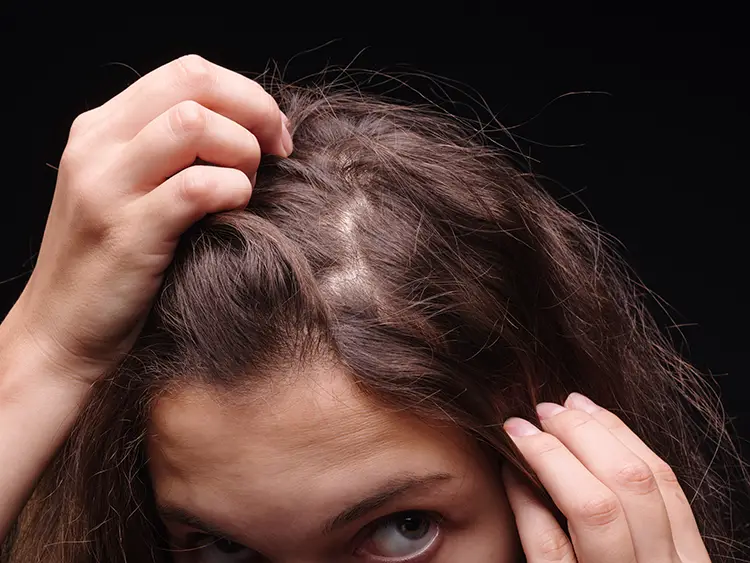
It is no surprise to many people that hair pulling is associated with stressful conditions like intense work sessions or study sessions before difficult medical school exams. Trichotillomania (TTM) is a consistent pattern of pulling out hair, leading to visible hair loss. Individuals often describe experiencing anxiety before hair pulling and experiencing pleasure, satisfaction, or relief afterward. What is TTM, and what are the dermatologic aspects of this psychiatric condition? In this article, learn about TTM and understand the psychiatric and dermatologic features that make TTM a unique – but concerning – condition for people who have the urge to pull their hair.
What Is Trichotillomania?
TTM is a psychiatric condition that can take a toll on a person’s mental health and can further worsen hair loss [1]. It is primarily diagnosed through clinical assessment, though confirmation can be achieved via a scalp punch biopsy. Typically, individuals use their hands to pull hair, but tweezers or other tools may also be utilized as substitutes. While hair from the scalp is commonly targeted, hair can be pulled from any area of the body. Additionally, there may be a ritualistic aspect to selecting hair and removing it, such as meticulously searching for coarse hair at the hairline after running hands through the hair. Although pulling hair seems to be associated with unintentional behaviors, it could be a response to extreme emotions like anxiety. Clinical research indicates that the occurrence of TTM ranges between 0.6% to 3%, with a higher occurrence among female individuals. TTM may also correlate with conditions such as depression, bipolar disorder, and obsessive-compulsive disorder. These connections, coupled with limited understanding regarding the diagnosis and progression of the disorder, complicate treatment efforts. TTM warrants early detection and compliance with therapies.
What Are the Symptoms of Trichotillomania?
TTM is hard to treat because of the compulsion that comes with it. Patients know the bald spots induced by the repeated behavior, but the urge still overpowers them. Some of the symptoms of trichotillomania may involve:
- Experiencing pleasure or relief after removing hair
- Observable hair loss, like shortened strands, thinning, or bald patches on the scalp or elsewhere
- Engaging in behaviors such as biting, chewing, or swallowing pulled-out hair
- Manipulating pulled-out hair, such as playing with it or rubbing it on the lips or face
- Making repeated efforts to stop or reduce hair pulling, often unsuccessfully.
Hair loss patterns can range from subtle thinning or areas of hair loss that are not immediately noticeable to entirely bald patches. Upon examination of the scalp, irregularly shaped patches of bald spots may be observed. These patches may feel stubbly, with hairs of varying lengths. In children, hair pulling often targets easily accessible hairs on the same side as their dominant hand, typically behind the forehead and ears and at the top of the head. Additionally, eyelashes and eyebrows may appear broken or absent. Repeated hair removal can damage the follicles, and to make matters worse, the removal can potentially cause irreversible scarring.
What Are the Complications of Trichotillomania?
While TTM may initially appear benign, it can have significant negative impacts on various aspects of a person’s life. Complications may include the following:
Hair loss can lead to avoidance of social interactions and opportunities in education and employment. Individuals may resort to wearing wigs, styling their hair to conceal bald patches, or using false eyelashes to camouflage the effects of trichotillomania. Unfortunately, intimacy may also be avoided to hide the condition.
Continuous hair pulling can result in scarring, infections, and other damage to the skin on the scalp or affected areas, potentially impacting hair growth permanently.
Ingesting pulled-out hair can lead to the formation of giant, matted hairballs in the digestive tract. Over time, this can cause weight loss, vomiting, intestinal blockages, and, in severe cases, even death.
Treatment of Trichotillomania
In treating TTM, a collaboration of multi-health specialties such as psychiatry and dermatology is necessary. The treatment of trichotillomania usually involves behavioral therapy and observations by parents or caregivers. In adults, doctors may advise antidepressants depending on the patient’s condition. Early diagnosis and prompt initiation of treatment are associated with a more favorable prognosis. In addition, a better prognosis is often observed when the disorder manifests at a younger age.
Initial treatment typically focuses on reassuring parents and caregivers about the condition and discussing potential management strategies. Behavioral therapy, often involving parental techniques, is commonly employed as part of the treatment approach. For cases of TTM that are resistant to initial treatments, especially in adolescents and adults, medications such as tricyclic antidepressants and selective serotonin reuptake inhibitors may be considered. Current research suggests modest positive effects with selective serotonin reuptake inhibitors. The effects are more robust in combination with behavioral therapy. In addition, there have been meta-analysis reviews of more recent research studies that have shown moderate positive effects of SSRI medications, but more pronounced effects were seen with therapy. The timeframe for experiencing improvement from medication, therapy, or a combination of both can vary significantly from individual to individual. A person’s healthcare provider can offer insights into what to anticipate during treatment and provide guidance on how the patient can support themself throughout the process.
While TTM is typically addressed more frequently in behavioral and psychiatry fields than in dermatology, patients are more inclined to seek assistance from dermatologists because of its presentations. It is essential for a person who suspects having TTM to relay his or her signs and symptoms to a doctor and ensure that early and effective treatment is initiated. There are TTM support groups in the community that you could also inquire about. Having TTM can be challenging, and it is highly recommended to seek a doctor who could help.