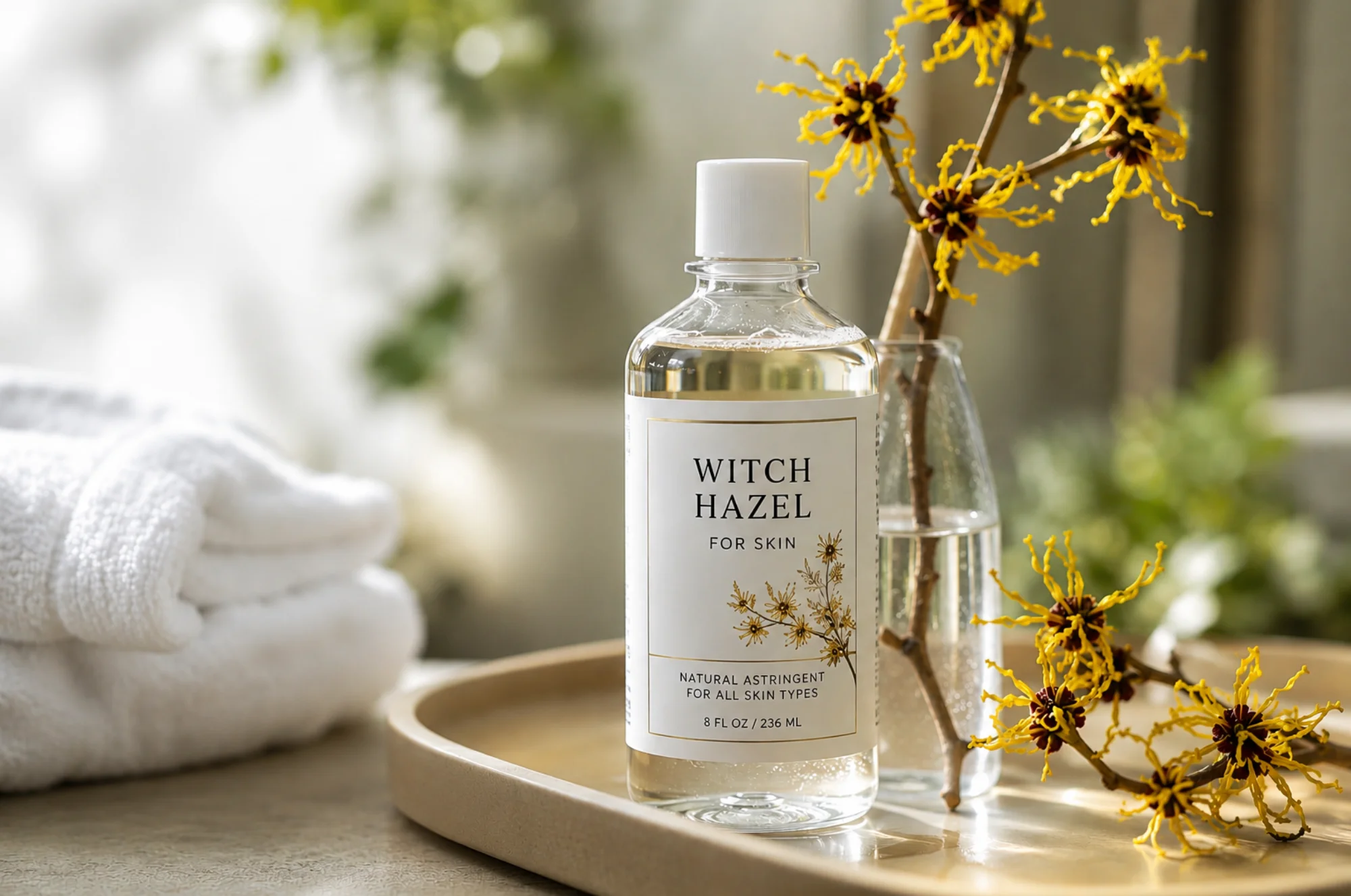
Witch hazel has been used in skincare for centuries, yet questions about its effectiveness, proper use, and risks remain common. This article uses input from Dr. Alicia Atkins. She is a board-certified dermatologist at DermOnDemand. It explains what the ingredient does.
It also covers which skin types it suits. It reviews what the evidence supports. It also shows how to use it correctly. The goal is to give you a clear, medically grounded answer to the questions most people have before adding witch hazel to their routine.
Key Takeaways
- Witch hazel is an FDA-approved, plant-based astringent derived from Hamamelis virginiana that works by contracting skin tissue to reduce excess oil, temporarily tighten pores, and calm surface inflammation.
- It performs best on oily, combination, and acne-prone skin; people with dry or sensitive skin should use alcohol-free formulas and do a patch test before applying it to the full face.
- The evidence is solid for mild, surface-level concerns such as scalp irritation, minor burns, and oiliness, but limited for conditions such as eczema, psoriasis, and fungal infections. It should not replace prescribed treatment for any diagnosed skin condition.
- Not all witch hazel products are equal – alcohol content, extraction method, and added ingredients vary widely across brands, and irritation is most often caused by ethanol or fragrance in the formula, not the witch hazel extract itself.
- Apply it after cleansing and before moisturizing, avoid layering it directly over AHA or BHA exfoliants, and always follow with a moisturizer – people with dry skin may want to check a dermatologist-recommended moisturizer for dry skin to prevent the astringent effect from leaving skin feeling tight.
What Does Witch Hazel Do for Your Skin?
What Witch Hazel Actually Is
Witch hazel is a plant-based ingredient. It comes from the bark, leaves, and twigs of Hamamelis virginiana, a shrub native to the eastern United States. It is sold as a liquid distillate or witch hazel extract, and the FDA has approved it for use in over-the-counter topical products.
You will find it in toners, astringents, medicated pads, and hemorrhoid treatments at most pharmacies. Not all products are equal – some contain alcohol in their formulations, which affects how they behave on the skin.
How It Works as an Astringent
The astringent properties of witch hazel cause skin tissue to contract on contact. This helps tighten pores, remove excess oil, and clear away makeup and dirt that washing alone may miss.
Many people use it after cleansing and before moisturizing to prep the skin. The tightening pores effect is short-term, not permanent, and pore size returns to normal once the astringent effect wears off.
Anti-Inflammatory and Antioxidant Properties
Witch hazel contains tannins and gallic acid. These two compounds are responsible for its anti-inflammatory properties. They work to reduce inflammation by lowering cytokine production, which triggers redness and swelling in the skin.
Research in the Journal of the American Academy of Dermatology confirmed that witch hazel extract reduces key inflammatory markers and supports the skin barrier. This anti-inflammatory effect is the basis for most of its uses.
Witch Hazel for Skin Benefits
The benefits of witch hazel come from its combination of astringent and anti-inflammatory activity. The advantages of witch hazel are most useful for surface-level concerns rather than diagnosed medical conditions. The witch hazel benefits for the skin vary depending on your skin type and the condition you are trying to address.
Acne and Oily Skin
Witch hazel reduces excess oil and has mild antibacterial activity that lowers acne-causing bacteria on the skin. For people with oily skin, it helps control shine and may reduce minor breakouts.
Clinical evidence on acne is still limited. The American Academy of Dermatology points to benzoyl peroxide and salicylic acid as the most effective OTC acne treatments.
Witch hazel can support those treatments, but should not replace them – for a full overview of acne causes and treatments, there are more targeted options that go beyond what a toner can offer.

Irritation, Redness, and Minor Burns
Witch hazel can soothe irritated skin from razor burn, mild sunburn, post-waxing redness, and the itch from a bug bite or minor skin reaction.
Apply it with a cotton pad using light pressure. Do not rub, as this can worsen surface irritation. It is not suitable for severe burns or diagnosed inflammatory conditions.
Scalp Sensitivity and Dandruff
Applied before shampooing, witch hazel reduces itching and surface inflammation on the scalp. A study of 1,373 people found that a shampoo with witch hazel extract reduced scalp irritation. It may also help with mild dandruff and discomfort from chemical hair treatments.
For diagnosed scalp conditions like seborrheic dermatitis, it can help support care. It is not a replacement for prescribed treatment.
Does Witch Hazel Kill Fungus on Skin?
Lab studies have shown some germ-killing activity in witch hazel against Candida yeast. Clinical evidence for its use against fungal skin infections in humans is limited, though.
It is not strong enough to be used as a primary antifungal treatment. If you have a confirmed fungal infection, use a medication recommended by a healthcare provider. Witch hazel can be part of a broader routine, but it cannot treat the infection itself.
What Do Dermatologists Think of Witch Hazel?
Where the Evidence Is Solid
Dermatologists generally support the use of witch hazel for mild, surface-level skin concerns. The FDA recognizes it as safe and effective for relieving hemorrhoid symptoms.
The effects of witch hazel on scalp irritation, surface oiliness, and minor skin reactions are reasonably well supported by research. Many board-certified dermatologists recommend it for oily or acne-prone skin, as long as the formula contains no alcohol.
Where Evidence Is Limited or Mixed
Evidence for witch hazel as a treatment for eczema is weak. It may reduce surface inflammation, but it does not address itching, the most disruptive symptom for most eczema patients.
Evidence for psoriasis and fungal conditions is also limited. Dr. Atkins and other dermatologists position witch hazel as a supportive skincare ingredient rather than a standalone treatment for any diagnosed condition.
Best Skin Types for Witch Hazel
Oily, Combination, and Acne-Prone Skin
These skin types respond best to witch hazel. It controls excess oil, reduces surface bacteria, and temporarily tightens pores without harming the skin barrier, as long as the formula is alcohol free. Most people with oily or combination skin tolerate daily use well. Alcohol free witch hazel products are the best choice for regular use.
Witch Hazel Side Effects on Your Face
Common Reactions to Watch For
The most common side effect of applying witch hazel to the face is dryness. Some people notice mild redness or a tight feeling, especially with alcohol-based formulas. Allergic contact dermatitis is possible but not common.
If you develop a rash, lasting redness, or more breakouts after starting use, stop and check the full ingredient list before trying again.
Dry, Sensitive, and Reactive Skin: What to Know
Ethanol alcohol in some witch hazel formulas is the main cause of skin irritation, not the witch hazel extract itself. If you have dry, reactive, or sensitive skin, choose an alcohol-free formula to lower your risk of a reaction.
Before using witch hazel on your full face, do a patch test on the inside of your wrist. Wait 24 hours. Any redness, itching, or swelling means you should choose a different product.
When to Stop Using It
Stop using witch hazel on your face if dryness worsens after 1 week of use. Also, stop if redness does not subside within a few minutes after each application, or if breakouts worsen.
Since witch hazel is not a prescription product, stopping will not cause a rebound reaction. Take a break and check whether the issue came from the formula, the fragrance, or the witch hazel itself.
How to Use Witch Hazel on Your Face
Using Witch Hazel as a Skin Toner
Witch hazel toner fits between cleansing and moisturizing. As a dermatologist-recommended toner, it removes residual dirt, rebalances skin pH, and helps skin absorb serums and moisturizers more effectively. Most people use it in the morning and at night as part of a cleanse-tone-moisturize routine.
Here is how to apply it:
- Wash your face with your regular cleanser and pat it dry.
- Soak a cotton pad with witch hazel toner until it is fully saturated.
- Sweep the pad gently across your face in upward strokes.
- Avoid the eye area.
- Do not rub – light pressure is enough.
- Wait 30 seconds, then apply your serum or moisturizer.

Alcohol-Free vs. Alcohol-Based Formulas
Alcohol free formulas offer the same toning and anti-inflammatory benefits as alcohol-based ones, without stripping the skin barrier.
Alcohol-based products can increase oil production over time, as skin tries to compensate for moisture loss. When checking witch hazel products, look for ethanol or isopropyl alcohol in the first five ingredients. If either is listed, choose a different product.
Can I Use Witch Hazel on My Face Daily?
For oily and combination skin, an alcohol-free formula used daily is generally fine. For normal skin, two to three times a week is enough.
Dry skin types should avoid daily use and treat witch hazel as an occasional step. Witch hazel uses for skin depend on your skin type, and the right frequency will become clear in the first two weeks of use.
Common Misconceptions About Witch Hazel
Several false beliefs affect how people use witch hazel. Here are the most common ones:
- It is not a sunscreen. Witch hazel does not block UV rays and should never be used in place of SPF.
- It is not the same as rubbing alcohol. The two products have different compositions. They are not interchangeable for use on the face.
- Not all witch hazel products work the same way. Extraction method, alcohol content, and added ingredients vary widely by brand.
- Irritation is usually caused by alcohol or fragrance, not witch hazel itself. If a product caused a reaction, check the label before ruling out the ingredient entirely.
- Switching to an alcohol free, fragrance-free formula often solves the problem. The witch hazel extract itself is well tolerated by most skin types when the formula is clean.
When to See a Dermatologist
Witch hazel works for surface-level skincare, but it is not a medical treatment. Persistent acne, eczema, rosacea, psoriasis, or a suspected fungal skin infection all need professional care and proven treatment.
If you are unsure whether witch hazel suits your skin type or condition, a board-certified dermatologist can assess your skin and guide you. DermOnDemand connects patients with licensed dermatologists for advice based on individual skin history and medical needs.