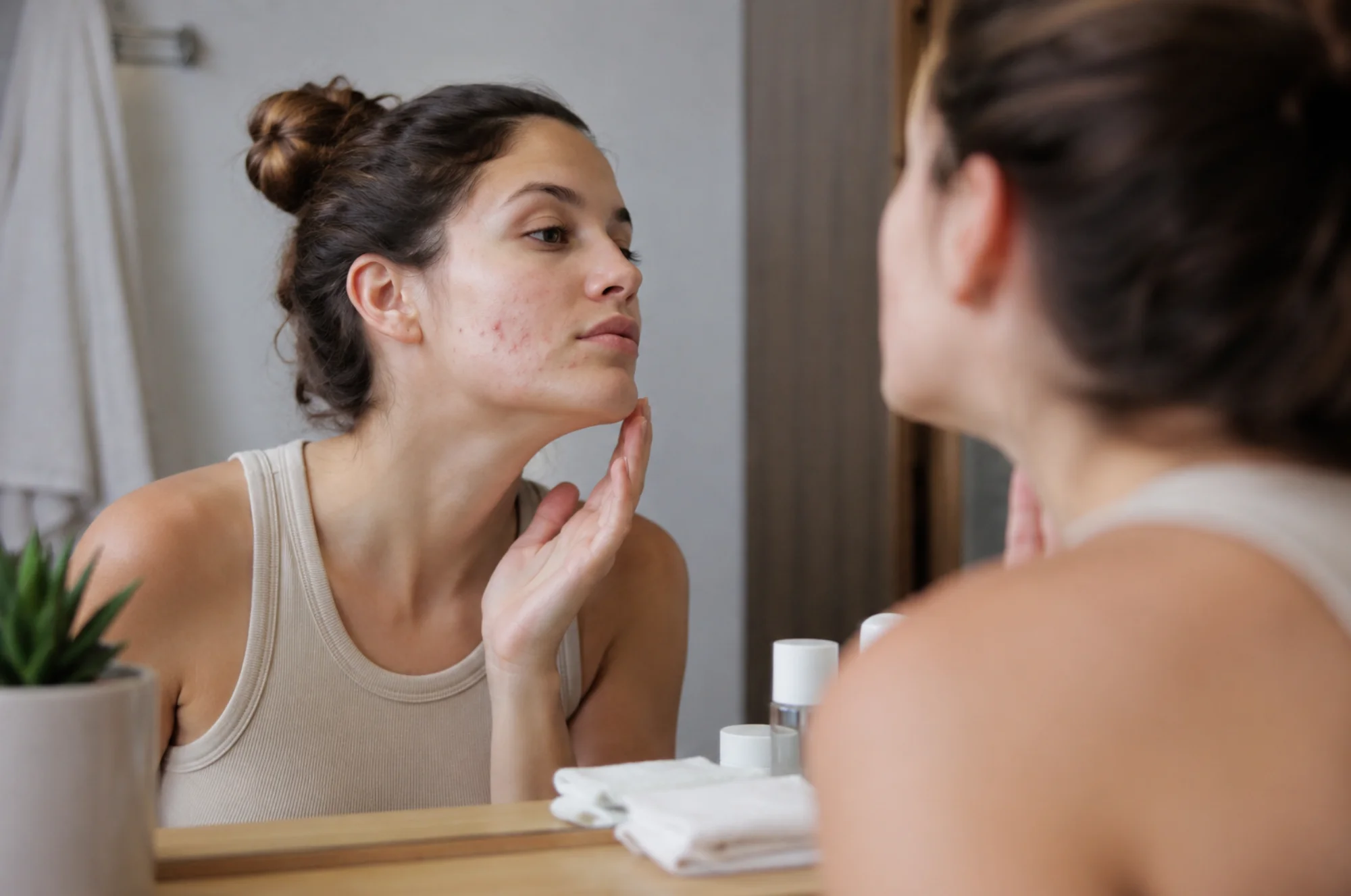
The main signs that Accutane is working include less oily skin, fewer new breakouts, smaller pimples, and less painful cystic acne. These changes often appear gradually, and some patients notice dryness before they see clear skin.
DermOnDemand provides this educational explainer to help patients understand the normal timeline, early skin changes, and safety considerations during Accutane treatment.
Dr. Alicia Atkins, a board-certified dermatologist, notes that isotretinoin progress can vary by acne type, dose, side effects, and medical monitoring.
Key Takeaways
- The main signs that Accutane is working include less oily skin, fewer new breakouts, smaller pimples, and less painful cystic acne.
- Early dryness, dry lips, and reduced oil may appear before major acne clearing because isotretinoin lowers oil production.
- Accutane results often start within 4 to 6 weeks, but fuller improvement commonly takes several months of treatment.
- Acne may worsen during the early purge stage, especially in the first one or two months, before it begins to improve.
- Contact your dermatologist if acne continues to worsen after several months, side effects affect your daily life, or mood, vision, or severe physical symptoms develop.
What Are Signs That Accutane Is Working?
The early changes can be subtle because isotretinoin works gradually inside the oil glands and pores. Dry lips or dry skin may also appear before major acne improvement, so progress does not always look like clear skin right away.
First signs Accutane is working may include:
- Less oil and shine on the face or scalp
- Fewer new breakouts each week
- Smaller, flatter pimples
- Less painful cystic acne
- Slower breakout cycles
By helping reduce inflammation, clogged pores, and oil production, Accutane supports treating acne at one of its main sources, though isotretinoin results vary by patient.
How Long Does Accutane Take to Work?
Some people notice changes in the first month, but fuller Accutane results often take several months, which is why the effectiveness of Accutane is usually judged across the full treatment timeline. If you are asking, “Accutane, when does it start working?” the answer depends on acne severity, dose, consistency, and your body’s response.
During the first week, most patients should not expect major clearing. Dry lips, dry skin, or reduced oiliness may appear before visible improvement in acne. By one month, some patients see fewer new breakouts, while others are still in the early adjustment phase.
The most visible improvement often occurs between months two and six. Acne may also get worse for a short period before it improves, especially during the early purge stage. This does not always mean the medication is failing.
How Does Accutane Affect Results
Dose can affect timing, side effects, and treatment adjustments. Lower doses, such as 10 mg or 20 mg, may work more gradually and may be used when a slower approach is appropriate. Higher doses, such as 30 mg or 40 mg, may still take months to show full results.
A higher dose is not always better. The safest plan depends on medical history, acne severity, tolerance, lab results, and potential side effects. Blood tests may help the prescriber monitor safety during treatment courses.
What Are the Stages of Accutane?
Accutane treatment usually moves through several stages. The timeline is not identical for every patient, but the general pattern helps explain what to expect. These stages also help patients understand why progress can feel uneven.
Common stages include:
- Starting Treatment: The prescriber reviews medical history, dose, safety rules, and monitoring needs.
- The Purge Stage: Acne may flare as lesions that were already forming come to the surface.
- The Improvement Stage: New pimples become less frequent, and inflammation may decrease.
- Treatment Completion: The clinician reviews the response, side effects, blood test results, and long-term acne control.
Patients who can become pregnant must follow strict safety rules. These may include negative pregnancy tests before starting, monthly pregnancy tests during treatment, and required forms of birth control. These rules exist because isotretinoin can cause serious congenital disabilities.

Can Acne Get Worse Before It Gets Better?
Yes, acne can get worse before it gets better. This early flare is often called an Accutane purge. It may look like more pimples, deeper bumps, or more inflammation during the first part of treatment.
The worst months on Accutane are often the first one or two months for patients who purge. This is also when common side effects, such as dryness and irritation, may become more noticeable. Purging usually improves over time, whereas treatment failure is more likely if acne continues to worsen after several months.
Signs Accutane Is Not Working
Signs that Accutane is not working include no clear improvement after several months, recurrent cysts, or worsening acne after the expected purge stage. This does not always mean the medication is wrong for you. It may mean the treatment plan needs to be reviewed.
New cystic acne that keeps forming may suggest the acne cycle is not controlled yet, which is why some patients also ask whether Accutane always works when progress feels slow.
This can happen with severe cystic acne, nodular acne, hormonal acne patterns, missed doses, or absorption issues. A dermatologist can review whether the dose, timing, or diagnosis needs to be adjusted.
What Stops Accutane From Working?
Several factors can make Accutane seem less effective. Missed doses can slow progress because isotretinoin works over time. Dose changes, absorption problems, and stopping treatment too early can also affect results.
Hormonal acne triggers may continue during treatment, especially around the jawline, chin, or lower face. Some patients may need additional evaluation if breakouts follow a strong hormonal pattern. Patients should not stop or restart Accutane (isotretinoin without medical guidance.
What Accutane May Not Fix
Accutane can reduce active acne, but it does not address every skin concern, and patients may want to know whether it helps with scarring after active breakouts have improved.
Red marks, dark marks, scars, and uneven texture may remain after breakouts improve. These changes are not always signs of active acne.
Acne scars are changes in skin texture. Isotretinoin may help prevent new scars by reducing severe acne, but it does not erase existing scars. Scar treatments are usually discussed after acne is stable and the skin barrier has recovered.
Common Side Effects During Treatment
Common side effects can appear before major acne improvement. These effects often reflect how isotretinoin reduces oil production throughout the body. Patients should report symptoms that are severe, persistent, or unusual.
Dry lips are one of the most common side effects. Dry skin can also affect the face, hands, and body. Dry eyes, nosebleeds, and sun sensitivity may also occur during treatment.
Gentle skin care can help reduce irritation. Patients should use mild cleansers, bland moisturizers, lip ointment, sunscreen, and sun-protective habits. Harsh scrubs, tanning, and aggressive treatments can irritate sensitive skin during isotretinoin use.

When to Contact Your Dermatologist
Patients should contact their dermatologist if progress is unclear, side effects affect daily life, or concerning symptoms appear. Medical supervision matters because isotretinoin can affect the body beyond the skin. The safest plan considers acne response, dose, blood tests, pregnancy prevention rules, and the full treatment course.
Report mood changes, mental health symptoms, vision changes, severe headaches, severe abdominal pain, or signs of pregnancy. Patients who can become pregnant should follow all testing rules, including monthly pregnancy tests and required forms of birth control. Dose questions should always go through the prescribing clinician rather than self-adjustment.