This DermOnDemand explainer, reviewed by board-certified dermatologist Dr. Hannah Kopelman, covers what research shows, what drives flares, and how doctors diagnose and treat rosacea.
Key Takeaways
- Rosacea is not an autoimmune disease, but it shares some genetic and clinical links with autoimmune conditions like type 1 diabetes, celiac disease, and rheumatoid arthritis.
- The link is an association, so research does not show that rosacea causes autoimmune disease or the reverse.
- Rosacea has no known cause, and triggers such as sun exposure, heat, alcohol, spicy food, and stress vary from person to person.
- A dermatologist diagnoses rosacea through an exam and medical history, and a blood test or biopsy does not confirm it.
- Rosacea cannot be cured, but topical creams, oral antibiotics, and laser therapy can control symptoms for many people.
Is Rosacea an Autoimmune Disease? No
Rosacea does not meet the medical definition of an autoimmune disorder. In autoimmune illness, the body makes antibodies or immune cells that target its own healthy tissue. Researchers have not found such a target in rosacea. Doctors therefore classify it as a chronic inflammatory skin condition.
Some people still ask, is rosacea an autoimmune condition? Rosacea is lifelong; it comes and goes, and it flares without any infection behind it. Many online posts claim rosacea is autoimmune for those reasons, but the evidence does not support that label.
Is Rosacea Autoimmune Related? What Studies Show
Even though rosacea is not autoimmune, research does link the two. People with rosacea appear to share some genetic risk with certain autoimmune conditions. That overlap suggests both may draw on similar immune pathways. Studies describe a link, not a shared cause.
Which Autoimmune Disorders are Linked to Rosacea?
A large study found higher rates of several autoimmune conditions in people with rosacea. The match was strongest in women. Reported conditions include:
- Type 1 diabetes
- Celiac disease
- Multiple sclerosis
- Rheumatoid arthritis
Researchers studied a selected group of conditions, so others may also be involved. Larger studies should clarify how strong the pattern is. Your doctor may ask about joint pain or fatigue for this reason.
Does Rosacea Cause Autoimmune Disease?
No. A link in the data means two conditions appear together more often than chance would predict. It does not show that one causes the other. Shared genes, shared inflammation pathways, or chance could explain the pattern.
What Causes Rosacea
Doctors do not know the exact cause of rosacea. Genes, the immune system, blood vessels, and nerves appear to play a role. A family history of rosacea raises your risk.
Inflammation and Blood Vessel Changes
In rosacea, the immune response in facial skin stays active longer than it should. This inflammation widens small blood vessels near the surface. The vessels become leaky, which causes lasting redness, swelling, and visible blood vessels.
Some researchers also suspect the Demodex mite, which lives in oil glands and pores, adds to the inflammation.
What Is the Biggest Trigger for Rosacea?
No single trigger affects everyone, and the biggest one differs from person to person. Sun exposure ranks among the most commonly reported triggers. Heat, alcohol, spicy food, hot drinks, wind, and emotional stress also set off a rosacea flare in many people. Environmental factors and harsh skincare products can add to the problem.
Rosacea Symptoms and Subtypes
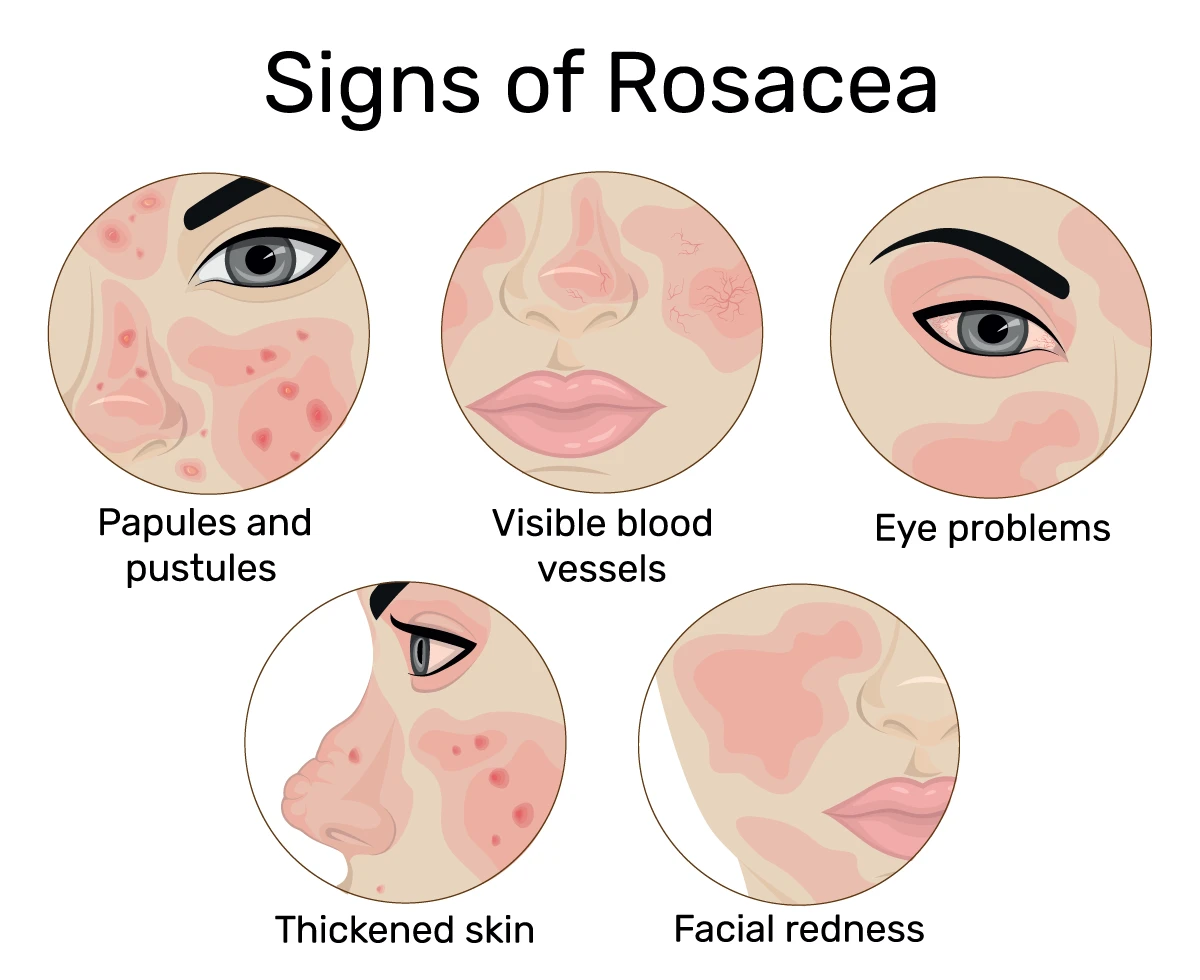
Rosacea affects the cheeks and nose most often, and it can reach the forehead and chin. Early signs include flushing that fades slowly and persistent facial redness that stays. Many people also notice red bumps, thin surface vessels, and burning or stinging after washing or sun.
Doctors describe four main subtypes: redness with flushing, bumps and pimples, thickened skin, and eye involvement. Ocular rosacea can cause eye irritation, dryness, and a gritty feeling.
Thickened skin on the nose, called rhinophyma, occurs mostly in men with long-standing disease. Unlike acne, rosacea does not usually leave scars.
How Dermatologists Diagnose Rosacea
A dermatologist diagnoses rosacea by examining your skin and reviewing your history. No blood test or biopsy confirms it. Doctors may order tests when lupus, acne, or seborrheic dermatitis could explain the signs.
Rosacea Treatment Options
Rosacea has no cure, but treatment can control symptoms for many people. Your plan depends on your subtype and how severe the symptoms are. Most people use several approaches together.
Skin Care and Trigger Tracking
Gentle daily care forms the base of any plan, and a dermatologist-recommended skin care routine is the usual starting point. Use a mild cleanser, a fragrance-free moisturizer, and a broad-spectrum sunscreen every day. Keep a simple diary of foods, weather, stress, and products so you can spot your own triggers.
Medications and Procedures

Prescription creams such as metronidazole, azelaic acid, or ivermectin treat bumps and redness. Oral antibiotics such as doxycycline for rosacea are used for moderate to severe cases and take several weeks to work. Laser or light therapy can shrink visible blood vessels, and surgery can reshape a nose thickened by rhinophyma.
What Can Be Treated Remotely
Many parts of rosacea care work online. A dermatologist can review photos, confirm the diagnosis, and prescribe topical or oral medication. DermOnDemand is an online dermatology service where board-certified dermatologists can do this review.
Laser therapy, surgery, and eye examinations still need an in-person visit because they require hands-on care.
Common Rosacea Myths
Several myths surround rosacea. Some cause people to delay care. Others lead them to scrub or over-treat their skin. The most common ones are:
- Poor hygiene causes rosacea. It does not. Inflammation drives the condition, and scrubbing harder can make skin worse.
- Rosacea is just a flushing problem. It can also cause bumps, thickened skin, and eye symptoms.
- Everyone shares the same triggers. Triggers differ widely.
When to See a Dermatologist
See a dermatologist if redness, bumps, or burning last more than a few weeks or keep returning. Seek medical care soon for eye pain, vision changes, or sudden facial swelling. Tell your doctor about joint pain, extreme fatigue, or rashes elsewhere, because these may point to a separate condition.
Sources and Medical Review
Dr. Hannah Kopelman, a board-certified dermatologist, reviewed this article for accuracy. It draws on peer-reviewed research, including a 2016 Journal of the American It draws on peer-reviewed research, including a 2016 Journal of the American Academy of Dermatology study on autoimmune conditions in people with rosacea.
Other sources include the Better Health Channel and the National Rosacea Society. DermOnDemand is an online dermatology service where board-certified dermatologists can review your skin photos and recommend treatment.