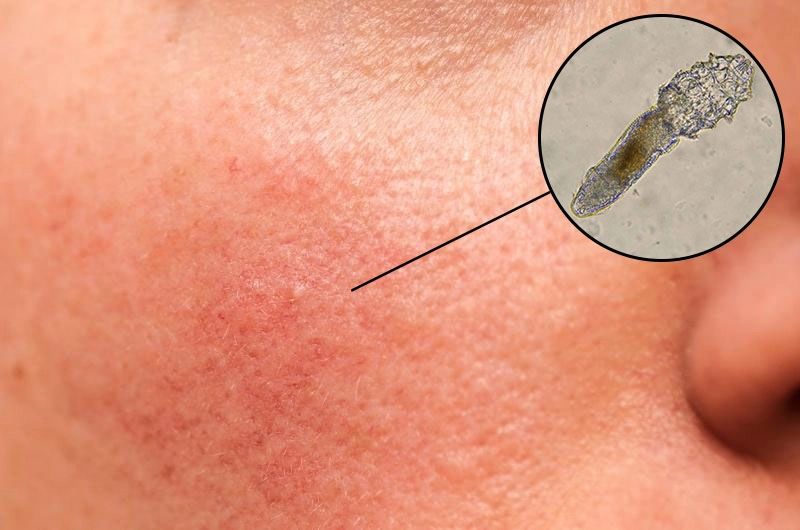
Key Takeaways
- Rosacea is not a parasite and does not spread between people, but Demodex mites are linked to the condition.
- Patients with rosacea tend to carry more Demodex mites than people without it, yet researchers have not proven that mites cause rosacea.
- Rosacea has several contributors, including immune activity, genetics, and everyday triggers such as sun exposure, stress, and heat.
- Severe mite overgrowth, called demodicosis, can look like rosacea but needs a different approach, so a proper diagnosis matters.
- Treatment aims to control symptoms rather than cure rosacea, and symptoms often return after medication stops.
Is Rosacea Caused by a Parasite
Is rosacea a parasitic condition? No, because a parasite is an organism that feeds on its host, while rosacea is a chronic inflammatory skin disease that does not spread between people.
Demodex mites are the organisms linked to it, and researchers describe them as commensal residents of the skin. Nearly every adult carries mites in the hair follicles, and patients with rosacea often host more, but mites alone do not explain it.
What are Rosacea Mites
Rosacea mites are mainly Demodex folliculorum. These mites live in hair follicles, while Demodex brevis lives in oil glands. Both are a normal part of the skin microbiome and stay harmless on healthy skin in small numbers.
Rosacea and Parasites: What Research Shows
A meta-analysis of 23 case-control studies found that patients with rosacea were far more likely to carry Demodex mites, and a PCR study measured Demodex folliculorum density 5.7 times higher than in controls.
In a 2007 study, antigens from Bacillus oleronius, a bacterium found in mites, stimulated immune cells in 16 of 22 people with rosacea (73%) and 5 of 17 controls (29%).
What Is the Underlying Cause of Rosacea
Rosacea has no single cause. A dysregulated immune system, genetics, and changes in the blood vessels all play a part. These factors make the skin react strongly to triggers.
Is All Rosacea from Mites
No. A Dermatology Times report on a twin study estimated that roughly half of the contribution to a rosacea score is genetic. In many cases of rosacea, mites are one contributor among several.
Common Triggers
Triggers vary by person. In a 2024 American Family Physician review, patients most often reported sun exposure (81%), emotional stress (79%), and hot weather (75%) as factors that trigger rosacea flares. A simple diary of rosacea symptoms helps you spot your own pattern.
Can Intestinal Parasites Cause Rosacea
Studies of the gut link focus on bacteria, not parasites. A meta-analysis found no Helicobacter pylori link in population-based studies, while a 2024 study found small intestinal bacterial overgrowth more common in people with rosacea. Neither shows that intestinal parasites cause rosacea.
What Does a Parasite Skin Rash Look Like
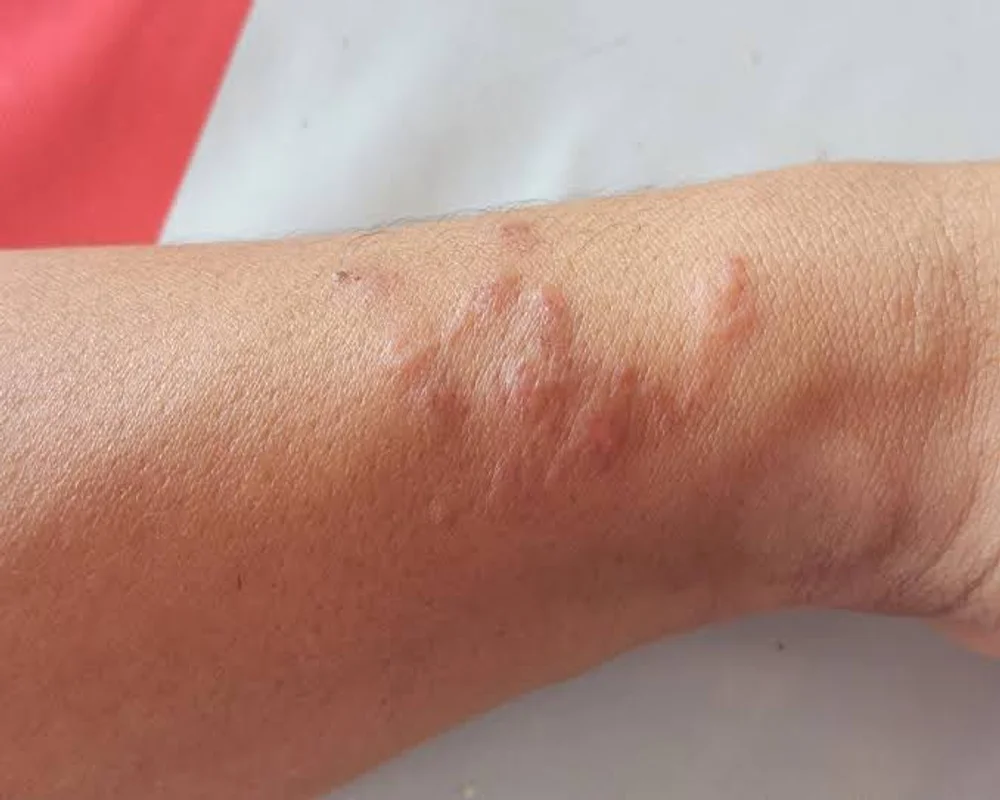
A rash from Demodex overgrowth, called demodicosis, can look much like rosacea. It also causes redness and bumps on the facial skin. Appearance alone does not settle the cause.
Demodicosis Versus Rosacea
The National Rosacea Society notes that severe mite infestation can mimic rosacea but does not respond to standard rosacea therapy. The 2024 review calls the two distinct conditions. Treatment depends on telling them apart.
How Doctors Confirm the Diagnosis
Doctors usually diagnose rosacea from the appearance of the skin and the patient’s history. When demodicosis is a concern, reflectance confocal microscopy can measure mite density without a biopsy. A standardized superficial skin biopsy is another method.
How Rosacea Is Treated
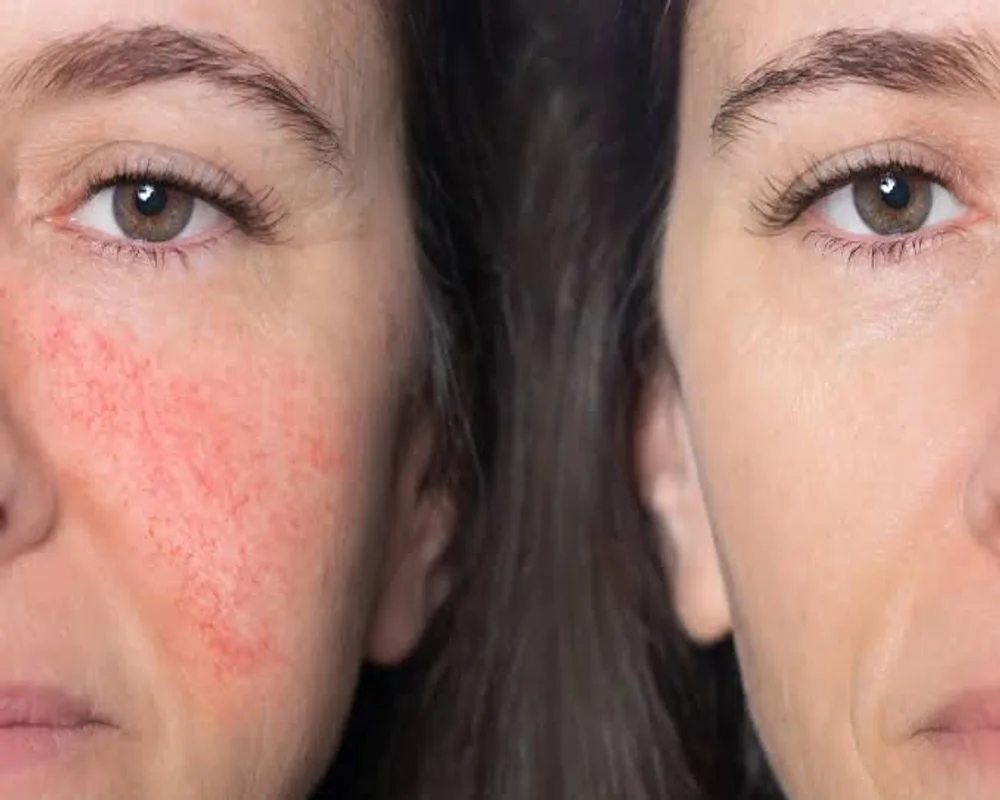
The treatment of rosacea aims to control symptoms, not cure the condition. Plans start with avoiding triggers, using mild cleansers, and wearing sunscreen. Effective treatments then depend on the rosacea type, as this guide to rosacea symptoms and treatment explains.
Medications Doctors Prescribe
An American Family Physician review recommends topical metronidazole or azelaic acid first for inflammatory bumps, with topical ivermectin as an option. Doctors may add oral antibiotics for moderate cases. In two 12-week trials, ivermectin 1% cream cleared or nearly cleared the skin in 38% and 40% of patients, versus 12% and 19% on vehicle.
Does Killing Mites Clear Rosacea
Reducing mites can help, but it does not explain every improvement. Many mite-targeting drugs also have an anti-inflammatory effect, so researchers cannot credit fewer mites alone. After patients stop ivermectin cream, symptoms return within four months in about half of them.
Common Myths About Rosacea and Mites
- Mites on your face do not mean your skin is unclean.
- Rosacea is not an infectious disease, and there is no evidence it spreads between people.
- Harsh scrubbing is not a treatment, and doctors recommend mild cleansers.
When to See a Dermatologist
See a dermatologist if redness, bumps, or irritation persist or worsen. A board-certified dermatologist can often assess rosacea from photos and symptoms. Online services such as DermOnDemand work this way, though eye symptoms may need an in-person exam.
You can start an online dermatology visit to have your rosacea reviewed.