
In this educational guide for DermOnDemand, Dr. Alicia Atkins explains why hair loss after Accutane may occur, how long it usually lasts, what normal recovery looks like, and when persistent shedding may indicate another cause.
Key Takeaways
- Post-Acne shedding is usually a temporary form of telogen effluvium, in which more hairs enter the resting phase and fall out weeks after treatment ends.
- Hair loss after Accutane typically peaks within 1 to 3 months and improves gradually, with visible regrowth often occurring between 6 and 12 months.
- Most cases are reversible, but persistent or patterned thinning may suggest another cause, such as genetics, thyroid imbalance, or nutrient deficiency.
- Supportive steps like gentle hair care and balanced nutrition help recovery, but they do not directly stop shedding or guarantee faster regrowth.
Does Accutane Cause Hair Loss After Treatment?
Yes, shedding can occur after finishing isotretinoin and is a known side effect of Accutane, as explained in this guide on whether Accutane causes hair loss, although it is less common than other reactions. Among the common side effects, some people also experience hair loss due to changes in the hair growth cycle. This is part of the broader group of side effects of isotretinoin treatment, which affect various tissues in the body, including long-term effects of Accutane.
This type of shedding is usually diffuse and temporary, not patchy or permanent. In most cases, follicles remain intact, which means regrowth is still possible once the cycle resets. While many patients recover fully, a small number may worry about permanent hair loss, especially if thinning patterns change over time.
Why Hair Loss After Stopping Accutane Happens
How Accutane Triggers Telogen Effluvium
Telogen effluvium is the main cause of shedding after treatment. When treating severe acne, isotretinoin can push more hairs into the resting phase simultaneously. This is known as induced hair loss, meaning it results from a temporary shift in the hair cycle rather than permanent damage.
Hair normally grows in cycles, with most hairs in the growth phase and a smaller portion resting. During hair loss from isotretinoin, more hairs leave the growth phase early and later shed together. This is why hair loss often appears weeks after treatment ends, rather than immediately.
Dose and Duration Risk Factors
Longer treatment and higher doses may increase the chance of temporary shedding. Some patients look for ways to prevent hair loss, but this is not always possible during treatment. Individual responses vary, which explains why not everyone develops visible hair loss after Accutane, even though it can be a side effect of isotretinoin treatment.
Post-Accutane Hair Growth and Recovery
When Shedding Usually Peaks
Shedding often peaks 1 to 3 months after stopping the medication. This delayed pattern explains why hair loss after Accutane may feel sudden, even after acne improves. The shedding phase usually slows within a few months, although in some cases, hair thinning may continue slightly longer before stabilizing.
Post Accutane Hair Growth Timeline and Recovery Milestones
A typical recovery timeline includes:
- Months 1–3: increased shedding
- Months 3–6: shedding slows
- Months 6–12: gradual regrowth
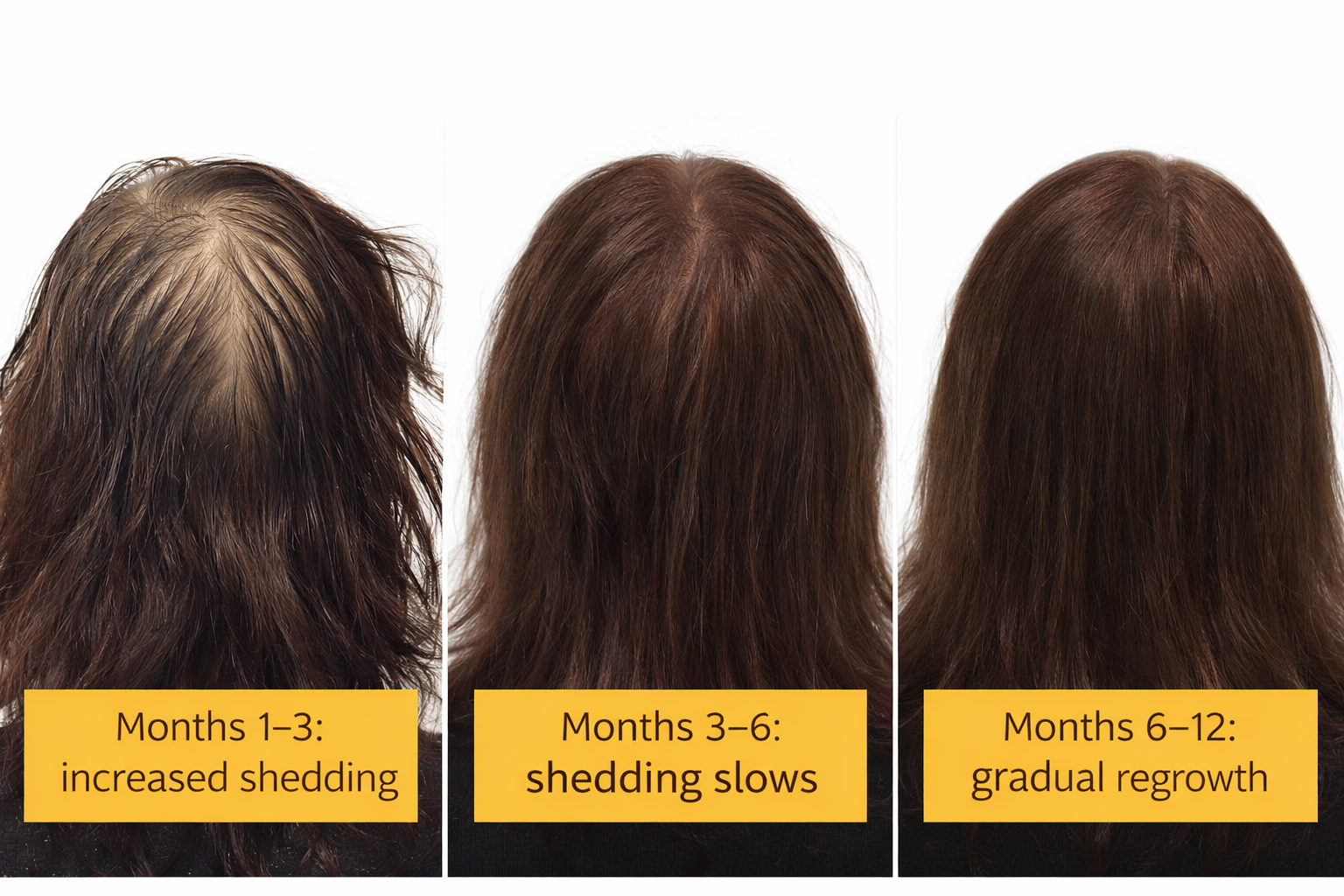
Hair growth is slow, so early regrowth may appear as short, fine hairs. Recovery timelines vary, but gradual improvement is the key sign of normal healing.
What Can Delay Regrowth
Low iron, thyroid imbalance, poor nutrition, and scalp changes, such as an Accutane-induced dry scalp, can delay recovery. Basic hair care and avoiding damage support visible improvement.
In addition, lifestyle factors such as poor sleep or high stress can contribute to ongoing shedding. Simple stress-relieving practices like consistent sleep schedules, gentle exercise, or relaxation techniques may support overall recovery by reducing additional triggers.
Is Accutane Hair Thinning Reversible?
Does Accutane Permanently Change Your Hair
In most cases, thinning is temporary and reversible. Hair may feel drier or thinner due to reduced oil production, as explained in “Does Accutane cause dry hair?”, but the follicles remain active. This means regrowth is expected over time, even for those who have experienced hair loss during or after treatment.
Temporary shedding usually appears as even thinning across the scalp. Pattern hair loss, in contrast, tends to affect specific areas and may not improve. Recognizing this difference helps guide next steps and reduces concern about permanent hair loss.
How to Regrow Hair After Accutane Hair Loss
Scalp Care During Recovery
Gentle routines help with protecting your hair during recovery. Useful habits include:
- Mild shampoo use
- Limiting heat styling
- Avoiding tight hairstyles
These steps reduce breakage but do not directly regrow hair.
Nutrition and Lab Deficiencies
Balanced nutrition supports regrowth, especially adequate protein, iron, and vitamins. If shedding persists, lab testing may identify issues that developed during isotretinoin therapy. This helps rule out causes beyond medication.

When Minoxidil May Help
Minoxidil may support regrowth in some cases, especially when recovery is slow. It helps extend the growth phase of hair follicles. A dermatologist should evaluate whether it is appropriate, based on your history and the shedding pattern. However, it is not necessary for most people.
When to See a Dermatologist
Signs of Pattern Loss, Thyroid, or Iron Issues
If shedding lasts longer than 6 months, other causes or broader Accutane long-term effects should be considered. These may include thyroid conditions, iron deficiency, or hormonal changes. In these cases, hair loss includes factors not directly related to medication.
Persistent or unusual patterns may require further evaluation. Identifying the correct cause helps guide proper management.
If shedding continues or you are unsure about the cause, a dermatology evaluation can help clarify what is happening and guide next steps. You can schedule a virtual assessment with DermOnDemand to review your symptoms and discuss appropriate care options.