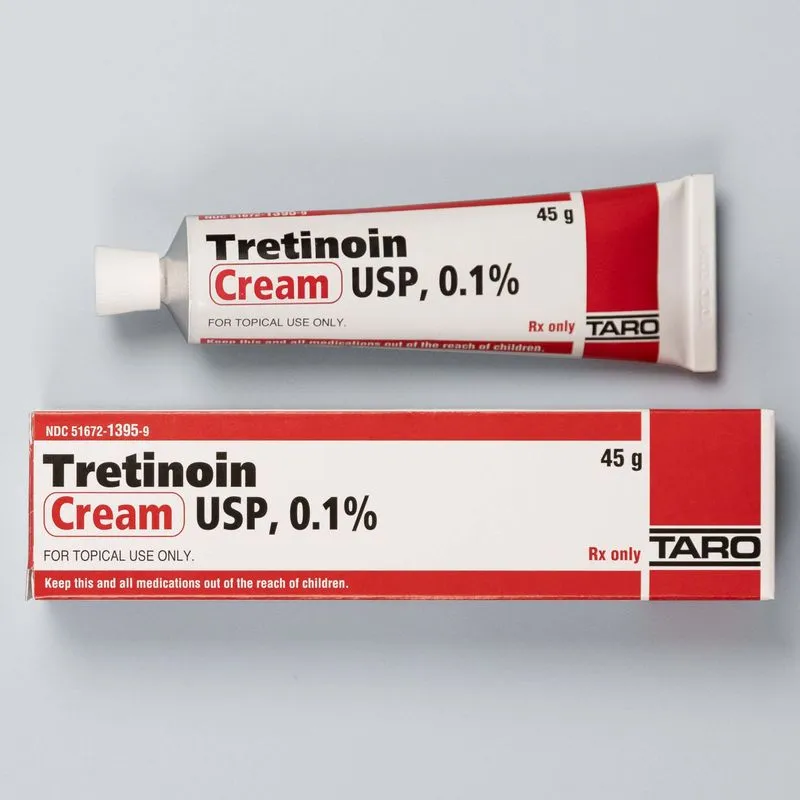
Tretinoin and adapalene are both retinoids, or derivatives of Vitamin A, that are applied topically to treat acne. To decide what medication may be the best option for you, it is important to understand what causes acne, the similarities and differences between the two medications, and the possible side effects.
Acne
Acne is a common skin condition associated with several factors. These include: increased sebum (oil) production, dysregulated skin cell shedding, overgrowth of bacteria, and inflammation. This increase in oil buildup of skin cells form a plug or clog in hair follicles, and the increase in bacterial growth and inflammation result in the redness that typically accompanies acne lesions. Acne presents with open or closed comedones (referred to as “blackheads” or “whiteheads,” respectively), papules, and pustules.
Tretinoin and Adapalene 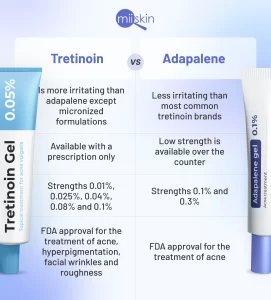
Both tretinoin and adapalene are retinoids that form the mainstay of acne treatment.
Tretinoin is available only by prescription from a medical professional and comes in several different strengths and forms. Tretinoin will typically come as a gel or a cream preparation, with either 0.025%, 0.05%, or 0.1% tretinoin. Your physician can work with you to determine the appropriate strength and preparation based on the severity of your acne and your skin. Tretinoin treats acne by increasing the rate at which your skin cells develop and shed, while also decreasing sebum production. In addition to treating acne, tretinoin also functions to reduce photoaging, or skin damage that is the result of cumulative sun exposure.
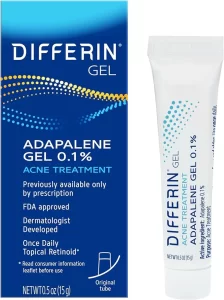
Adapalene was formerly a prescription-only treatment, but a 0.1% gel was approved by the FDA as an over-the-counter treatment for acne in 2016. Adapalene is sold under the brand name Differin® as well as generic formulations that are available. Adapalene 0.1% lotion and 0.3% gel are also available by prescription. Like tretinoin, adapalene increases cell turnover & shedding, decreases the production of sebum, and reduces inflammation. A benefit of adapalene 0.1% is that it is typically less irritating and better tolerated by patients than tretinoin. While studies suggest that adapalene and tretinoin can be equally effective in treating acne, there is limited evidence to suggest that adapalene is effective in reducing or reversing photoaging, however this is a topic that needs further research.
Side Effects:
Because tretinoin and adapalene are both retinoids, they have similar side effects. Two of the most common side effects include retinoid dermatitis and photosensitivity. Both adapalene and tretinoin can cause what is referred to as “retinoid dermatitis” or skin irritation as a result of using a retinoid product. Retinoid dermatitis is characterized by itching, and a burning sensation at the site of application, redness, and skin flaking or peeling. Retinoid dermatitis typically appears within the first few weeks of treatment. Retinoid dermatitis is more commonly experienced by patients using tretinoin, compared to those using adapalene. Another important side effect of retinoids is that these medications increase your sensitivity to the sun. Patients using a retinoid product need to take extra care to avoid excessive sun exposure and ensure that they are taking precautions to avoid UV exposure such as wearing sunscreen, wearing UV protective clothing, and ensuring that they are indoors during peak sun hours.
To determine which medication is best suited for you, it is important to consider you overall goal. Are you looking to kill two birds with one stone and treat acne while also helping to reduce photodamage and improve the appearance of your skin? Or are you someone with a more mild case of acne, or with sensitive skin, that may benefit from the better tolerability of adapalene? By working together with your dermatologist you can determine which medication is right for you, while also learning how to manage the potential side effects.