For Channel Partners

Integrate your portfolio with our comprehensive dermatology
solution

Increase your market share with
our comprehensive dermatology platform

Expand and maintain your client base:

Gaining the trust of one organization at a time.

Comprehensive member care:

Achieving the precise dermatology care they need in a shorter time.

Easy procurement:

Offer DermOnDemand directly to your clients.

Proven Outcomes

At DermOnDemand we merge asynchronous teledermatology
with our in-person network of practices to deliver better access to care that is cost-effective.

of employers achieve an average savings of $1000 per employee
improvement in individual productivity
satisfaction rate from patients

Leveraging Partnerships

Building partnerships plays a crucial role in extending our reach into dermatological care  contributing to a holistic healthcare solution.

  • Health and Wellbeing Platforms
  • Professional Employer Organizations (PEOs)
  • Human Capital Management (HCM)
  • Benefits Captives
  • Benefit Aggregators
  • Care Delivery and Navigation

Learn More from DermOnDemand

Our continuing commitment to improve patient outcomes through data analysis and research is what sets us apart.

Is Castor Oil Good for Skin? Benefits, Risks, and Uses

Castor oil can help soften dry, rough skin and reduce moisture loss by forming a protective layer on the surface. In that limited sense, the answer to “is castor oil good for skin?” is yes, especially for small dry areas and lips. Its thick texture may feel heavy, trigger irritation, or contribute to clogged pores and breakouts in oily or acne-prone skin.

It should be used in small amounts and should not replace treatment for rashes, infections, acne, dark spots, or other skin conditions.
Read More »

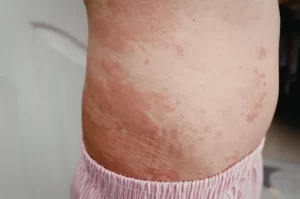
Dry Skin Patches: Causes, Symptoms, and Treatment

Dry skin patches usually develop when the skin loses moisture because of cold weather, low humidity, hot water, harsh soaps, or irritating products. They may also result from eczema, psoriasis, contact dermatitis, or a fungal infection, especially when the area is itchy, inflamed, scaly, spreading, or slow to heal.

Mild cases often improve with a gentle cleanser, a regular moisturizer, and reduced exposure to known irritants, while persistent, painful, bleeding, or changing patches may require medical evaluation.

Read More »

Sun Spots on Skin: Causes, Signs, and Treatment

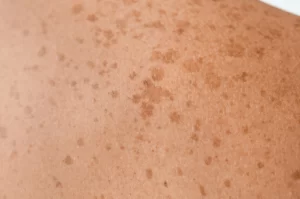
Sunspots, or solar lentigines, are flat, harmless brown marks caused by cumulative ultraviolet exposure. Although sun spots on the skin are not cancerous, they show that the area has sustained sun damage and should be monitored for changes in color, shape, size, or texture.

Treatment may include retinoids, vitamin C, chemical peels, cryotherapy, laser therapy, or light-based procedures, while daily broad-spectrum sunscreen helps prevent new spots and limits existing ones from darkening.

Read More »

Skin Yeast Infection: Symptoms, Causes, and Treatment

A skin yeast infection, also called cutaneous candidiasis, occurs when Candida overgrows on the skin. It often causes a red, itchy, burning, or tender rash in warm, moist areas such as the groin, armpits, under the breasts, and other skin folds.

Common causes include trapped moisture, friction, antibiotics, diabetes, and reduced immune defenses. Treatment usually involves keeping the area dry and using an appropriate topical antifungal; persistent or severe cases may require medical evaluation.

Read More »

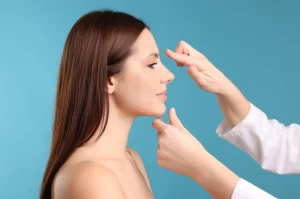
Is Accutane Nose Permanent or Temporary?

Accutane does not permanently change the shape or structure of your nose. The search question “is accutane nose permanent?” usually arises from noticing a slimmer-looking nose during or after treatment, but that change occurs at the skin level. Isotretinoin can reduce inflammation and shrink overactive oil glands, which may make the nose look smoother, less swollen, or more defined during treatment.

This effect does not alter bone or cartilage. Some skin-level changes may last if oiliness and acne stay controlled, but the nose may look closer to its previous appearance if oil production returns after treatment. The key difference is that Accutane may change the skin over the nose, not the nose structure itself.

Read More »

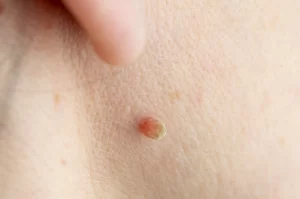
How to Get Rid of Skin Tags With Safe Removal Options

Skin tags are benign growths and usually do not need treatment unless they rub, bleed, hurt, affect function, or cosmetically bother a person. The safest way to remove them is through a medical professional who can confirm the growth is truly a skin tag, then use methods such as snipping, freezing, electrosurgery, or ligation.

If you are researching how to get rid of skin tags, avoid cutting them off at home or using harsh products, especially near the eyes, genitals, or irritated skin. Over-the-counter and home methods may seem simple, but they can cause burns, scarring, infection, or delay evaluation of a growth that is not actually a skin tag.

Read More »