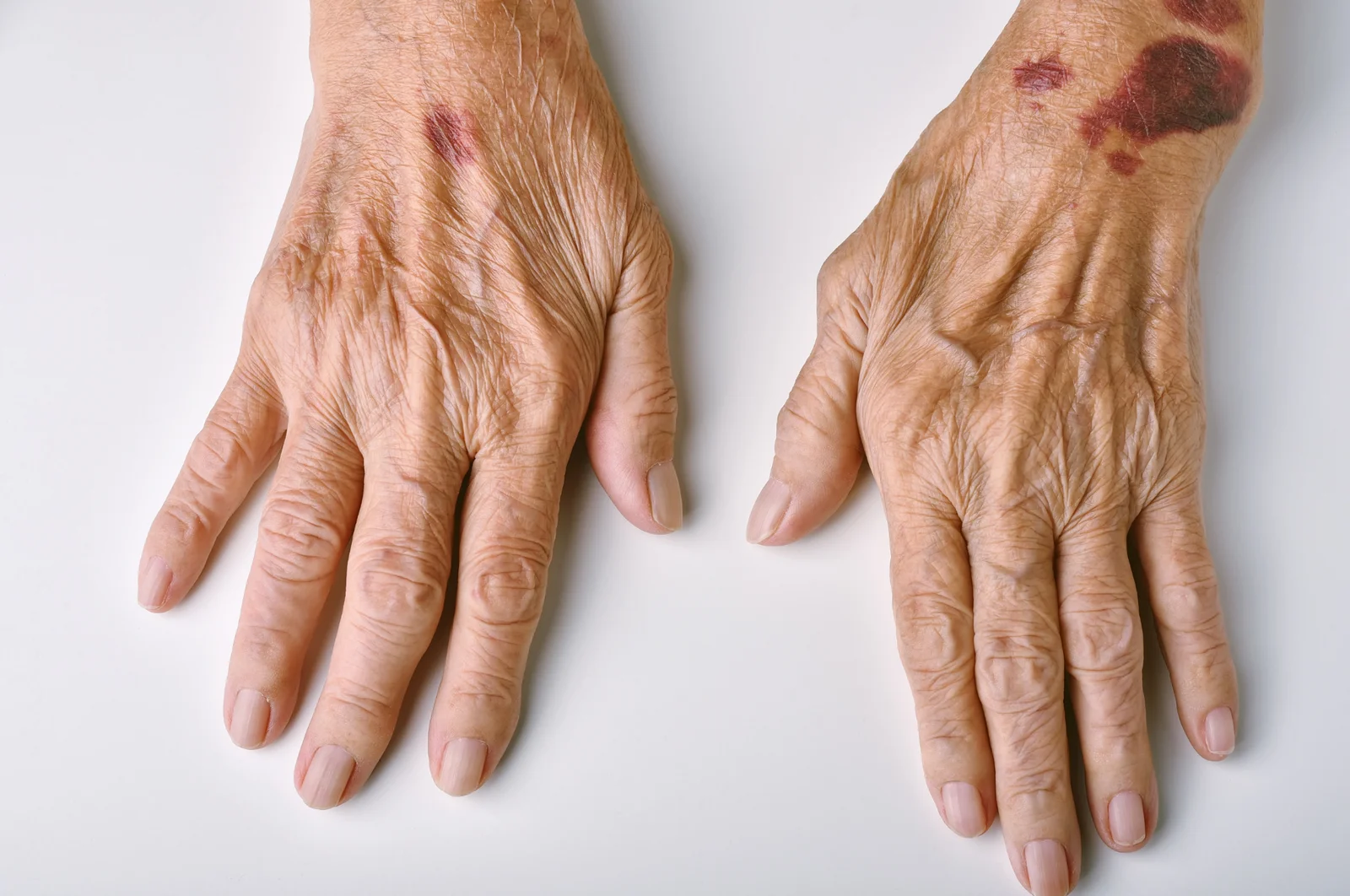
Blood spots appear when small blood vessels, called capillaries, break and leak blood beneath the skin. These spots may look red, purple, brown, or dark, and they often stay flat rather than turning white when pressed. The term blood spots under skin can include petechiae, which are pinpoint dots, or purpura, which appears as larger patches.
Common causes include minor injury, scratching, straining, medication side effects, infections, inflammation, platelet problems, or blood-clotting disorders. Treatment depends on the cause, so mild spots from trauma may fade on their own, while sudden, spreading, painful, or unexplained spots may need a medical exam, blood test, or other evaluation.
This DermOnDemand explainer, informed by the clinical perspective of Dr. Ross Atkins, reviews what these spots can mean, how doctors evaluate them, and when medical care may be needed.
Key Takeaways on Blood Spots
- Blood spots form when blood leaks from small vessels under the skin.
- They may look like petechiae, purpura, bruises, or red patches.
- Causes range from minor injury to medicines, infection, inflammation, or blood disorders.
- Diagnosis may involve a skin exam, blood test, or biopsy.
- Medical evaluation is important when spots are unexplained, spreading, painful, or linked with bleeding or fever.
What Are Blood Spots Under Skin?
Blood spots under skin happen when blood escapes from tiny vessels below the surface. The skin may look red, purple, brown, or almost black, depending on skin tone and how long the blood has been present. These spots may be flat or slightly raised.
They can look like bruises, petechiae, or purpura. Petechiae are tiny pinpoint spots. Purpura describes larger purple or red spots caused by bleeding under the skin.
Blood Spots, Petechiae, Purpura, and Bruises
Blood spots under the skin can have different names based on size, shape, and cause. Petechiae are very small red, purple, or brown dots that often appear in clusters.
Purpura usually refers to larger spots caused by bleeding under the skin.
Bruises, also called ecchymoses, are larger areas of bleeding under the skin. They often change color as they heal, while petechiae and purpura may stay flatter and more defined.
A clinician may press on the area, check the pattern, and ask about symptoms to help separate these findings.
What Are Blood Spots a Sign Of?
Blood spots can be a sign of a minor injury, skin fragility, medicine effects, infection, inflammation, or a medical condition that affects bleeding or clotting.
The cause depends on the size, location, pattern, and other symptoms.
- Minor Injury
A small bump can break tiny vessels and cause bleeding under the skin. The affected area may feel sore or tender. These marks often fade as the body clears the leaked blood.
- Medications
Blood thinners, aspirin, steroids, and some supplements can make bruising or bleeding more likely.
- Blood Clotting Problems
Blood clotting problems can cause easy bruising, bleeding, or spots beneath the skin. Some people describe this as blood clotting on skin.
- Infection or Inflammation
Some infections and inflammatory diseases can affect blood vessels. This may cause spots, rash-like patches, fever, or body aches. Spots that spread quickly or come with illness need prompt medical evaluation.
- Vitamin Deficiencies
Low vitamin C or vitamin K may affect skin, blood vessels, or clotting. This can lead to bruising, gum bleeding, or small red spots. Diet history and lab testing can help guide care.
You may also been interested in: Understanding Eczema: Symptoms, Triggers, and Treatment Options
Types of Purpura
Doctors may group purpura into types based on whether platelet levels are low. Platelets are blood cells that help the body form clots and stop bleeding. Low platelet levels can lead to easier bruising, petechiae, or purpura.
Thrombocytopenic purpura means the person has a low platelet count. Nonthrombocytopenic purpura means platelet levels may be normal, but another issue affects the blood vessels or clotting process. This difference matters because treatment depends on the underlying cause.
What Blood Spots Can Look Like
Internal bruising spots vary in size, color, and shape. Some are tiny and flat, while others look like broader purple patches. Their appearance can help guide evaluation, but it cannot confirm the cause alone.
- Tiny Red Blood Spots on Skin
Tiny red blood spots on skin may be petechiae. They often look like pinpoint red, purple, or brown dots. Unlike many rashes, they may not fade when pressed.
- Flat Red or Purple Spots
Flat red or purple spots can occur when blood leaks under the skin. Red spots underneath skin may look like a rash at first. A doctor may check whether they blanch, spread, or appear with other symptoms.
- Red Blotches on Arms
Red blotches on arms may come from sun damage, minor injury, irritation, or purpura. In older adults, the forearms are a common site for fragile-vessel bruising. Recurrent or unexplained marks should be reviewed.
You may also be interested in: Dermatology Pictures of Skin Conditions: A Visual Guide
Purpura Rash & Unexplained Purple Bruise on Arm
A purpura rash refers to purple, red, or brown spots caused by blood leaking under the skin. Purpura can be related to platelet problems, vessel inflammation, medication effects, or other conditions. The spots may be small or broad and may not lighten with pressure.
An unexplained purple bruise on arm may happen after unnoticed pressure or mild trauma. It may also relate to medicine use, fragile skin, or bleeding changes. Bruises that keep appearing without clear cause need evaluation.
When Blood Spots May Be Serious
Some blood spots need medical review because they may signal a deeper problem. Seek care when spots appear suddenly, spread quickly, or come with bleeding, fever, weakness, or severe pain.
When to Seek Urgent Medical Care
Seek a healthcare professional if blood spots appear with fever, confusion, severe weakness, trouble breathing, heavy bleeding, or a rapidly spreading rash. These symptoms may point to infection, severe inflammation, or a blood-related problem. They need in-person evaluation.
Medical care is also important when blood spots appear after starting a new medication. Some medicines can affect platelets, clotting, or blood vessel health. A clinician can decide whether testing or medication review is needed.
- Sudden or Spreading Spots
- Fever, Bleeding, or Fatigue
How Doctors Diagnose Blood Spots
Doctors diagnose blood spots by combining skin findings with medical history. They may ask about injury, medicines, recent illness, bleeding, family history, and how long the marks have been present.
- Skin Exam
- Blood Tests
- Skin Biopsy

Treatment for Blood Spots and Purpura
Treatment depends on the cause. Mild bruising may only need observation, while platelet disorders, inflammation, infection, or medicine-related bleeding may need a specific plan. Purpura treatment should focus on the reason the blood leaked.
Treating the Underlying Cause
If purpura comes from infection, inflammation, low platelets, or another disorder, treatment must address that cause. This may involve medication changes, lab monitoring, or specialist care. The visible spots may improve after the main issue is managed.
Medication Changes
A clinician may review blood thinners, aspirin, steroids, or supplements. Patients should not stop prescribed medicines without medical advice. Stopping some medicines suddenly can create health risks.
You may also want to read: Dermatology Medications: Complete Guide and List
Can Blood Spots Be Treated Remotely?
Remote review can help describe the appearance, timing, and pattern of blood spots. It may support education and help decide whether in-person testing is needed. DermOnDemand may use photos and symptom history as part of this type of assessment.
What Photos Can Show
Photos can show color, size, location, and spread over time. Clear images may help distinguish bruises, petechiae, and purpura-like spots. Photos cannot confirm platelet counts, clotting issues, or internal causes.
When In-Person Care Is Needed
In-person care is needed when spots spread quickly, appear with fever, bleeding, severe pain, swelling, dizziness, or major fatigue. It is also needed when blood work or biopsy may be required. Physical exams and lab tests remain important for unexplained or recurrent spots.