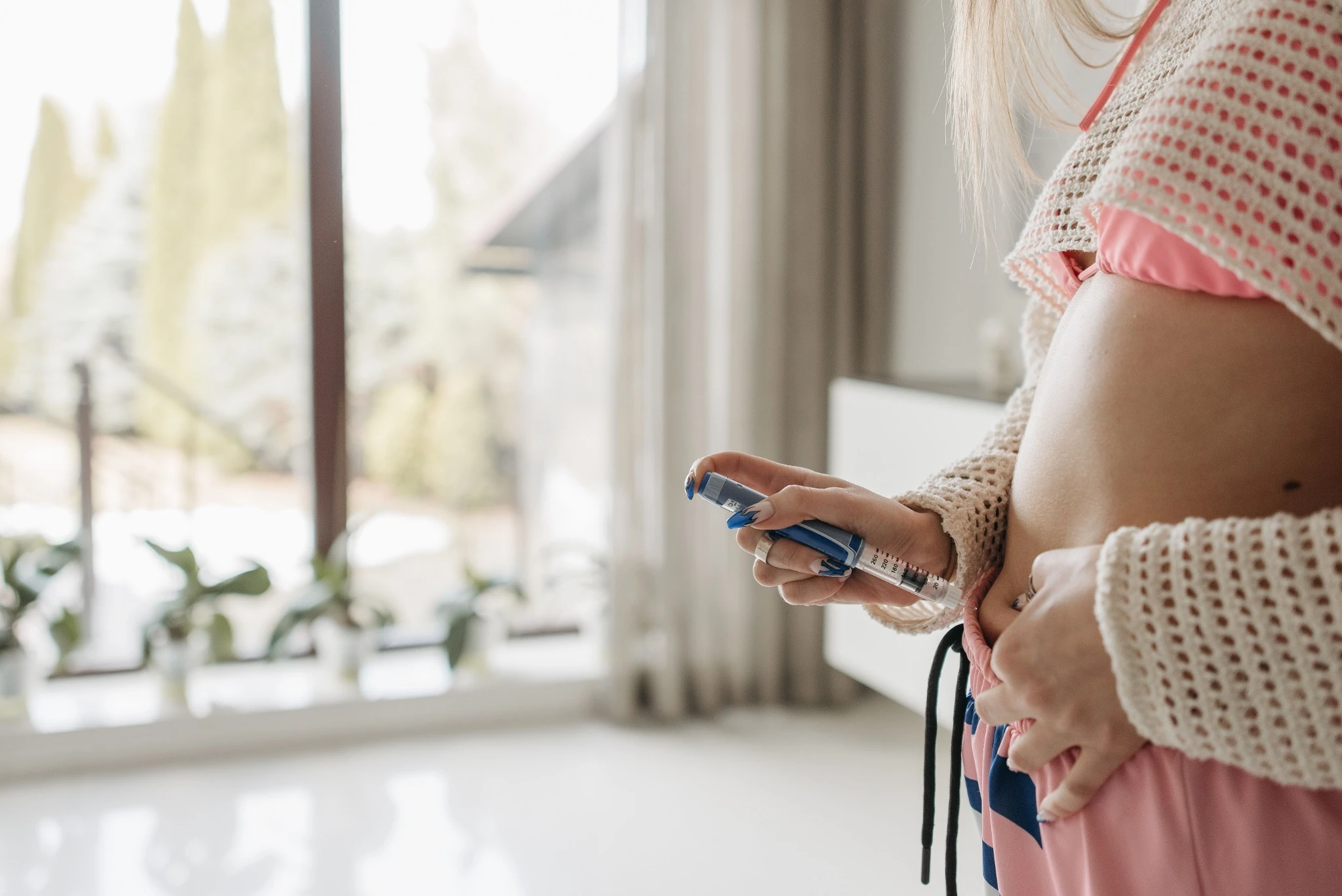
That timeline matters because a lot of the dramatic before-and-after photos online skip past the slow, unremarkable early weeks that everyone actually goes through.
Key takeaways
- Ozempic is FDA-approved for type 2 diabetes, not weight loss. The clinical trial data most before-and-after content cites (STEP-1) actually used the higher 2.4 mg Wegovy dose, not Ozempic’s 2 mg maximum, so results for off-label Ozempic use for weight loss can run somewhat lower.
- Visible change typically starts around month 3, once the dose has reached a therapeutic level, not in the first few weeks.
- Facial changes are often the first thing people (and others) notice, sometimes called “Ozempic face,” which is a consequence of rapid fat loss generally rather than a unique drug effect.
- Don’t judge your progress against the first 8 weeks. That period is mostly about tolerability, not results.
What actually happens month by month
Month 1: You’re on a low, non-therapeutic starting dose. Expect around 2 to 5% of starting body weight lost, more from appetite reduction and initial water changes than dramatic fat loss. Side effects like nausea tend to be most noticeable during this stretch, simply because your body is encountering the medication for the first time.
Months 2 to 3: As the dose increases, more visible changes start to show up, often in the range of 3 to 6% of starting weight. This is usually when the first noticeable differences appear in photos, frequently in the face before anywhere else.
Months 3 to 6: This is where the most commonly cited “transformation” period happens for most people. Weight loss tends to accelerate as the dose reaches a therapeutic level, with many people in the 5 to 10% range by month 6.
Months 6 to 12: The most dramatic changes people associate with before-and-after photos typically show up here. Trial data for the higher-dose formulation used in the STEP-1 study showed an average of about 14.9% of starting body weight lost over 68 weeks, though individual results vary substantially and off-label Ozempic dosing (capped lower than Wegovy) often produces somewhat more modest results.
What people notice first
A fairly consistent pattern shows up across patient reports: facial changes tend to appear first, often before differences elsewhere on the body are obvious in clothing or on a scale. Midsection and waist changes tend to follow over the next couple of months, with overall body composition shifts becoming most apparent by month 6 and beyond.
What “Ozempic face” actually is
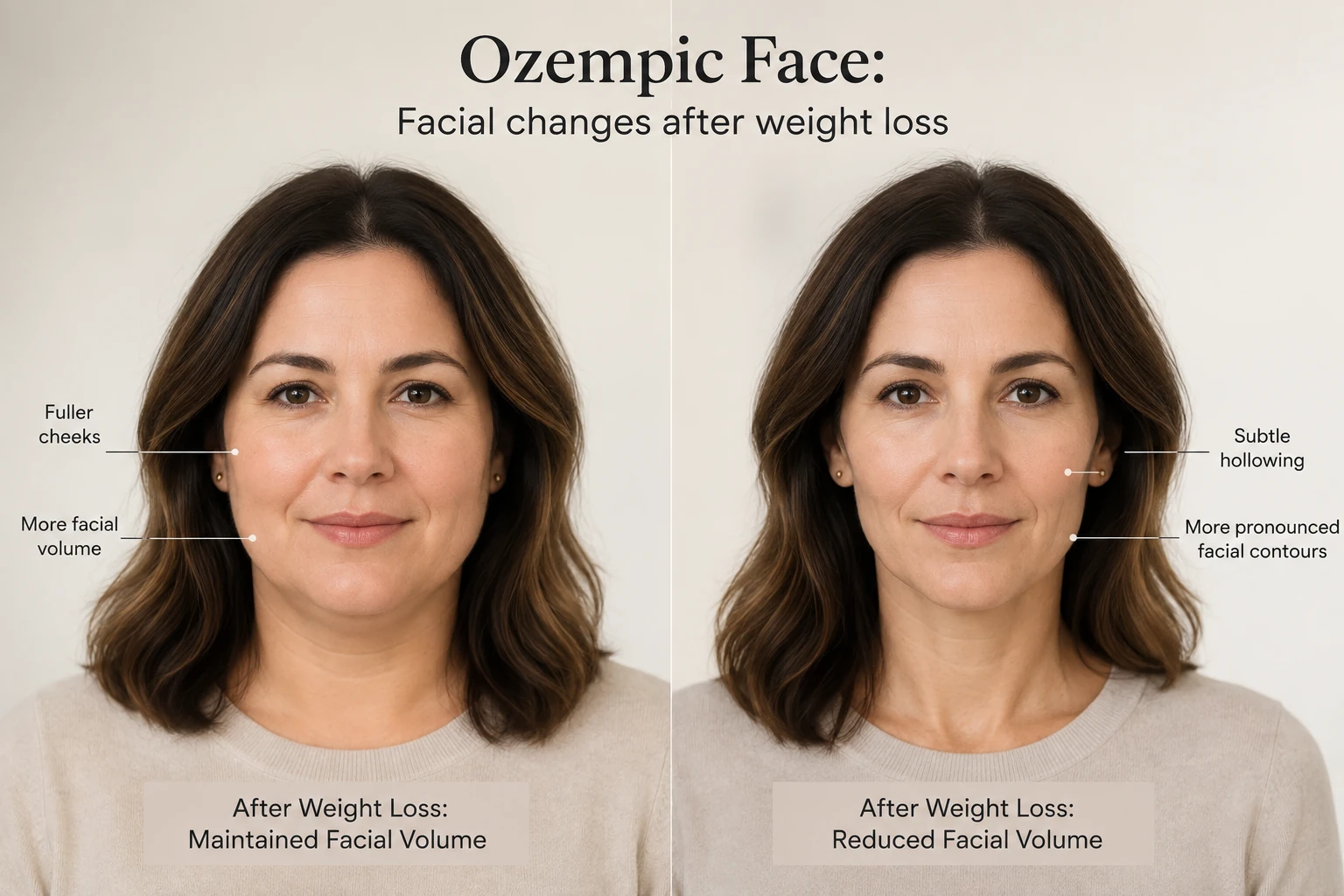
“Ozempic face” refers to a gaunt or hollowed appearance that can show up during rapid weight loss on GLP-1 medications. It isn’t a unique side effect of the drug itself. It’s the visible result of losing facial fat and volume quickly, the same thing that can happen with any fast weight loss regardless of the method.
A meaningful portion of weight lost on these medications comes from lean mass alongside fat, which is part of why facial hollowing shows up the way it does. Adequate protein intake and resistance training during treatment are commonly recommended to help preserve muscle and soften this effect, though they won’t eliminate it entirely for everyone.
Why before-and-after photos can be misleading
Social media before-and-after content, and the growing number of AI tools that generate a “preview” of your future body from clinical averages, tend to show the most dramatic outcomes rather than typical ones. Heavier starting weights generally produce larger absolute pounds lost for a similar percentage of body weight, which is part of why the most viral transformation photos tend to come from people who started at a higher BMI.
Your own timeline and results depend on your starting point, your specific dose, and how consistently you stay on treatment, not on what shows up in someone else’s photos.
Ozempic dose and the weight loss timeline

Ozempic’s FDA-approved dosing for type 2 diabetes starts at 0.25 mg weekly and increases over 8 to 16 weeks up to a 2 mg maximum. That’s a lower ceiling than Wegovy’s 2.4 mg standard maintenance dose (or the newer 7.2 mg Wegovy HD option), which is part of why weight loss results reported in major clinical trials, often run under the Wegovy brand, don’t map perfectly onto someone using Ozempic specifically for off-label weight loss.
If weight loss is your primary goal, it’s worth discussing with your provider whether Ozempic, Wegovy, or another option better fits your dosing needs.
Getting started
A licensed provider can help set realistic expectations based on your starting point, health history, and goals, rather than the extremes shown in social media or celebrity coverage. At DermOnDemand, our board-certified providers review your information online and build a personalized treatment plan, typically within 24 hours, with prescriptions sent directly to your pharmacy when appropriate.
Frequently asked questions
Is it normal to not see changes in the first month?
Yes. The first month is on a low, non-therapeutic dose specifically to reduce side effects, not to drive weight loss. Meaningful change typically starts a few weeks after that.
Can I prevent “Ozempic face”?
You can’t eliminate it entirely if you’re losing weight quickly, but adequate protein intake and resistance training during treatment are commonly recommended to help preserve muscle and soften facial volume loss.
Will I get the same results as the clinical trial data?
Not necessarily. Much of the widely cited trial data comes from the higher Wegovy dose rather than Ozempic’s lower maximum, and individual results vary based on dose, consistency, and personal factors no chart can predict.
Ready to talk to a provider about what to expect? Start an online consultation with DermOnDemand and get a personalized treatment plan, often within 24 hours. Learn more on our Ozempic page, or see pricing details here.