A dermatologist-recommended laundry detergent cleans well without the extras that irritate skin. These formulas skip fragrance and dyes and use mild, hypoallergenic ingredients, which lowers the risk of contact reactions.
Liquids usually beat powders because they dissolve better in water and rinse out more completely. The NEA seal means a product avoids the group’s list of known eczema triggers and has passed a scientific review. It applies to specific products, so check the bottle.
Choosing the right formula protects your skin barrier and helps you avoid flare-ups from harsh additives or lingering residue.
Key Takeaways
- The best laundry detergent for sensitive skin is a fragrance-free, dye-free liquid, ideally with the National Eczema Association Seal of Acceptance. Liquids also rinse out more completely than powders, which leaves less residue on fabric.
- “Unscented” products can still contain a masking fragrance, so look for “fragrance-free” on the label. This one label check matters more than most marketing claims.
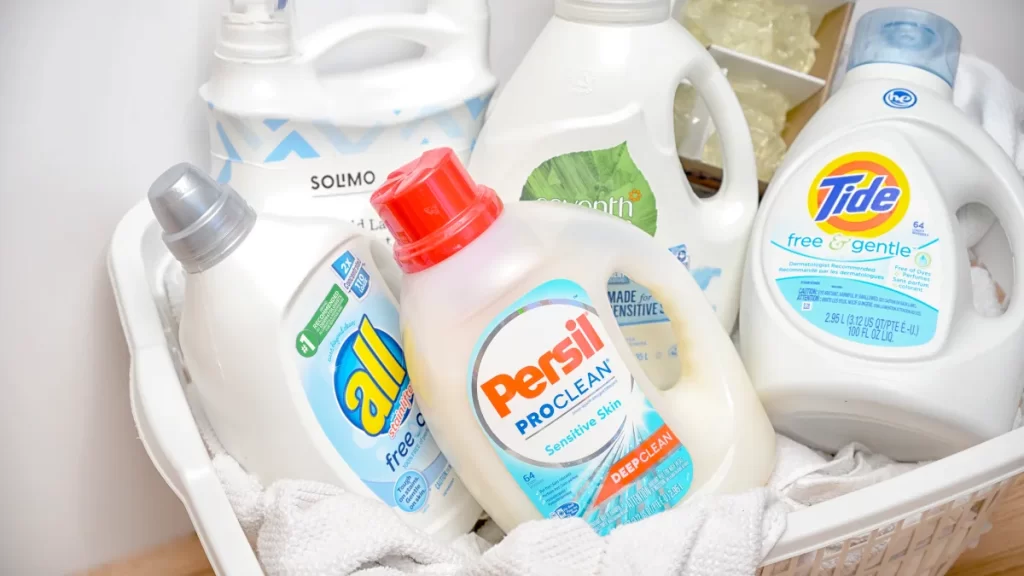
- Seventh Generation Free & Clear, All Free Clear, and Tide Free & Gentle are three strong starting points. Tide Free & Gentle also earned both the NEA and National Psoriasis Foundation seals.
- Use only the amount printed on the label and rinse a little longer. Leftover detergent is a common trigger for itching and redness.
- Switching detergents can help, but it may not clear a rash on its own. If irritation continues after you switch, see a dermatologist.
Top 3 Dermatologist-Recommended Laundry Detergents for Sensitive Skin
Looking for the best detergent for sensitive skin? Each pick below is fragrance-free and dye-free.
Seventh Generation Free & Clear Liquid Laundry Detergent
A plant-based formula with no fragrance or dyes. It cleans without harsh additives, so it suits eczema-prone households.
All Free Clear Liquid Laundry Detergent
A longtime choice for people with dermatitis or chronic irritation, and an NEA seal holder. It rinses out completely in any washing machine, which helps limit flare-ups and allergic reactions.
Tide Free & Gentle Non-HE Liquid Laundry Detergent
Free of dyes and perfumes, and the first detergent to earn both the NEA seal and the National Psoriasis Foundation (NPF) seal, per Happi. This is the non-HE version for standard washers. Tide also makes an HE-compatible Free & Gentle liquid for HE washers.
Best Liquid Laundry Detergent for Sensitive Skin
Seventh Generation Free & Clear is a dependable first choice. It has no fragrance or dyes and rinses clean, so little residue stays on fabric.
It shows what dermatologists look for in a gentle wash: few additives, no fragrance, and strong cleaning. That makes it a top liquid pick for chronic dryness or reactive skin.
Best Detergents for Eczema & Itchy Skin
The best laundry detergent for eczema is fragrance-free, dye-free, and rinses out completely. Any dermatologist-recommended laundry detergent for eczema should meet all three. Liquids also clean well at low temperatures, which helps preserve fabric softness.
A fragrance-free fabric softener or dryer sheet can add comfort without the irritation. For long-term relief, consider personalized eczema treatment options guided by board-certified dermatologists.
Seventh Generation Free & Clear
Plant-based, fragrance-free, and dye-free. It cleans well and leaves little residue, which lowers the odds of itching after washing.
Hypoallergenic and mild enough for daily use. It rinses clean to help prevent irritation.
Recommended Options for Dermatitis & Psoriasis
For dermatitis or psoriasis, choose a liquid labeled “dermatologist tested.” Liquids dissolve better in water, so less residue is left to inflame patches.
The best laundry detergent for psoriasis and dermatitis is mild, fragrance-free, and rinses clean. Tide Free & Gentle also earned the NPF seal, which the foundation gives to products it reviewed for psoriasis-prone skin.
If your condition persists, a customized psoriasis treatment plan may help manage symptoms more effectively.
Free of perfumes and dyes, two common triggers of dermatitis flares. It cleans well without harsh extras.
Arm & Hammer Sensitive Skin Free & Clear
Pairs a fragrance-free base with baking soda to control odors. It leaves fabrics fresh and soft without a scented residue.
Detergents That Don’t Cause Irritation
A gentle laundry detergent for sensitive skin uses milder cleansers instead of sulfates or bleach. Look for labels that say “free,” “gentle,” or “hypoallergenic.” Fragrance-free options work best for homes with several sensitivities.
Ecos Hypoallergenic Laundry Detergent, Free & Clear
A plant-based, eco-friendly formula. It suits households managing multiple sensitivities or allergies.
Persil Free & Sensitive Liquid Detergent
A fragrance-free formula made for easily irritated skin. It rinses clean, which helps limit buildup that can cause dryness or redness.
What Makes a Detergent Safe and Dermatologist-Approved
Ingredients to Avoid (Fragrance, Dyes, Preservatives)
If you have eczema, psoriasis, or contact dermatitis, skip added fragrance and dyes. Both are common triggers for dryness and irritation.
Look for “fragrance-free,” not “unscented.” Unscented products can contain a masking fragrance, according to the American Academy of Dermatology. Optical brighteners, bleach, and heavy preservatives add extras your skin does not need.
A simple test: if a detergent has a strong scent or a long list of hard-to-pronounce chemicals, it is probably not the right choice.
How to Pick a Good Laundry Detergent for Sensitive Skin
Check the label for these four things:
- Fragrance-free, not “unscented”
- Dye-free
- NEA seal, when available
- Liquid formula, measured to the label amount
Best Hypoallergenic Laundry Detergent: What the Label Means
Hypoallergenic means a formula is made to lower the odds of a reaction. The label alone does not guarantee it suits your skin, so check the ingredient list and look for the NEA seal.
Many hypoallergenic laundry detergents are also eco-friendly, meaning biodegradable and easier on your home and the environment. Some use baking soda to remove odors without harsh chemicals. Expect some trial and error, since each person reacts differently.
Worst Detergents to Avoid
Skip detergents that advertise “fresh scent,” “color brightening,” or “deep clean.” These often rely on strong perfumes, phosphates, or synthetic whiteners that can leave a film on fabric. That film can worsen dryness and itching for reactive or allergy-prone skin.
Laundry Soap vs. Detergent
True soap is made from fats and lye, while detergent uses synthetic cleaners. Many products sold as “laundry soap” are actually detergents, so check the label.
Soap can react with minerals in hard water and leave a film on fabric. The National Eczema Association warns that product left on clothes after washing and drying may irritate sensitive skin.
The best laundry soap for sensitive skin follows the same rules as any wash product: fragrance-free, dye-free, and well rinsed. In hard-water areas, add an extra rinse cycle.
Dermatologist Tips for Skin Safety
When to Switch Your Detergent
If your clothes itch or your skin turns red after washing, switch to a fragrance-free formula. Ongoing irritation often means detergent residue is stuck to your clothes.
Use only the amount on the label, and rinse a little longer to pull more detergent out of the fabric. The American Academy of Dermatology also suggests washing new clothes before you wear them.
Spotting Laundry-Related Reactions
Contact dermatitis often appears where clothing fits tightly, such as waistlines, underarms, or the neck. In some cases, prolonged exposure can lead to pigmented contact dermatitis, a form of skin discoloration caused by repeated irritation.
Re-wash your clothes with a hypoallergenic detergent and skip scented fabric softeners. This switch often calms the skin within a few days.
Best Laundry Detergent for Contact Dermatitis
For contact dermatitis, choose a fragrance-free, dye-free liquid and add an extra rinse. Leftover detergent is a common trigger where fabric presses on skin.
If one area keeps flaring after you switch, the trigger may be something else, such as a dye in the fabric or a skin care product. A dermatologist can help narrow it down.
Best Laundry Detergent for Acne-Prone Skin
Your wash does not cause acne on its own, but fragrance and leftover residue can irritate skin that is already inflamed or dry from acne treatments. Pillowcases, towels, and workout shirts touch your face and back for hours, so what stays on them matters.
No official “acne-safe laundry detergent” label exists, so use the same checklist: fragrance-free, dye-free, and well rinsed. Any detergent for acne-prone skin should be mild enough for pillowcases and gym clothes. Benzoyl peroxide can bleach fabric, so use white linens while you treat.
Laundry changes will not clear breakouts alone. Persistent acne needs acne treatment from a dermatologist.
When to Seek Professional Care
If irritation, redness, or rash continues after you switch to a gentle formula, talk to a dermatologist. At DermOnDemand, our board-certified dermatologists can assess your skin, suggest a detergent that fits, and prescribe care for an ongoing eczema flare or dermatitis.
These steps protect your skin barrier and make your laundry routine safer and more comfortable.
Quick Answers on Choosing a Detergent
What is the best laundry detergent for sensitive skin?
Pick a fragrance-free, dye-free liquid, ideally with the NEA seal. Seventh Generation Free & Clear, All Free Clear, and Tide Free & Gentle are three solid starting points. If irritation continues after you switch, see a dermatologist.
Is “unscented” the same as fragrance-free?
No. Unscented products can still contain a masking fragrance. Choose “fragrance-free” on the label.
Final Thoughts
Choosing the right detergent is one of the easiest ways to protect your skin every day. Pick a hypoallergenic formula, avoid fragrances and dyes, and rinse your clothes well after each wash.
For personalized help or medical-grade skin care advice, start your online dermatology plan with DermOnDemand, where board-certified dermatologists help people with sensitive and eczema-prone skin stay healthy and irritation-free.