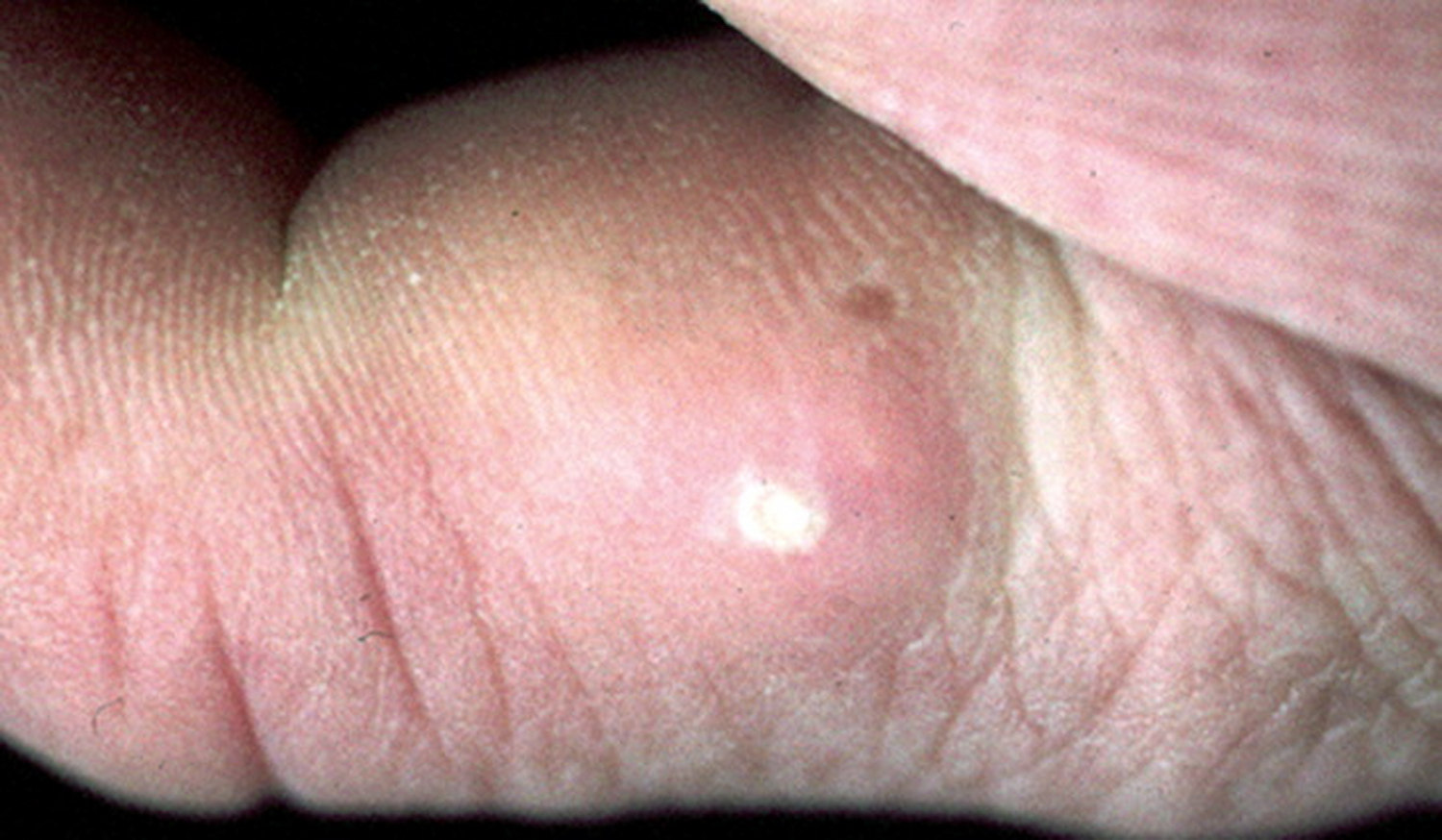
Calcium deposits on the skin are firm bumps. They form when calcium salts build up in the upper layers of the skin and nearby tissue.
This article explains what causes these deposits, how they look, how doctors diagnose them, and which treatments are available. Dr. Alicia Atkins, a board-certified dermatologist with DermOnDemand, reviews the medical considerations covered in this guide.
Key Takeaways
- Calcium deposits on the skin, known medically as calcinosis cutis, form when calcium salts build up in the skin or the tissue just beneath it. They typically look like hard, white or yellow bumps that can be painless or tender.
- The most common form develops in damaged tissue and is often linked to connective tissue diseases such as scleroderma, lupus, and dermatomyositis. Other causes include abnormal blood calcium or phosphate levels, certain medical procedures, and chronic kidney disease.
- Severity varies widely. Many cases are mild and painless, while calciphylaxis tied to end-stage renal disease can cause major complications and be life-threatening.
- There is no universal treatment protocol. Dermatologists combine medications, surgical or laser removal, and lifestyle adjustments based on the cause and severity of the lesions.
- Anyone with new or growing hard bumps on the skin should see a dermatologist. People with autoimmune diseases, kidney disease, or renal failure face a higher risk and benefit from early evaluation.
What Are Calcium Deposits on the Skin?
Calcium deposits on the skin are called calcinosis cutis, or skin calcification. They form when calcium salts build up in the skin. They can also build up in the tissue under the skin. The deposits often appear as white or yellowish bumps and can be hard or rubbery to the touch.
Skin calcium accumulation may be small or large, single or clustered, and sometimes leaks a chalky white material when punctured. The condition can affect anyone, but it is more common in people with certain underlying health problems.
What Does Calcium Accumulation on the Skin Look Like?
The visual appearance of these lesions varies based on size, depth, and location. Most look like firm white or yellow bumps that sit just below the skin’s surface. Some grow slowly and remain unchanged for years, while others develop rapidly and cause discomfort.
Common Locations on the Body
Calcium deposits tend to develop in specific areas of the body, especially near joints. Common sites include:
- Elbows, knees, and hips
- Fingertips and forearms
- Buttocks and scalp
The bumps usually form in clusters and can range in size from a pinhead to a large nodule. Multiple lesions are more common than a single one.
Calcium Lumps on the Face
Calcium lumps on the face are less common but can occur on the cheeks, eyelids, scalp, and around the medial canthus near the eye. When this condition affects the face, it is sometimes called calcinosis cutis face involvement. The bumps are usually small, white, and grouped rather than appearing as a single lesion.
When Lesions Become Painful or Ulcerate
Many lesions cause no symptoms at first. As they grow, they may become tender, painful, or restrict movement near joints. Some bumps break open and discharge a chalky, paste-like material. Ulcerated lesions are at risk of infection and slow healing, which is why any new or changing bump on the skin needs early medical evaluation.
Causes of Calcium Accumulation on the Skin
Doctors classify these lesions into five main types based on the underlying cause. Each type has distinct triggers, lab findings, and treatment paths. Understanding the type helps guide both diagnosis and care.
Dystrophic Calcinosis
Dystrophic calcinosis cutis is the most common form. It develops in damaged tissue, even when blood levels of calcium and phosphate are normal. Connective tissue diseases such as scleroderma, lupus, and dermatomyositis are the most frequent triggers.
Metastatic Calcinosis
Metastatic calcification occurs when blood levels of calcium or phosphate are abnormally high. Causes include chronic kidney disease, hyperparathyroidism, sarcoidosis, excess vitamin D, and certain bone disorders. Treating the underlying cause is essential.
Idiopathic Calcinosis
Idiopathic calcinosis cutis appears without a clear cause, with normal lab values and no tissue damage. Common examples include tumoral calcinosis, subepidermal calcified nodules, and scrotal calcinosis. The condition often affects children, teens, or healthy adults.
Iatrogenic Calcinosis
Iatrogenic calcinosis cutis results from a medical procedure or treatment. Common triggers include calcium chloride electrodes used during diagnostic tests, certain intravenous solutions, and repeated heel pricks in newborns. Organ transplant recipients can also develop this type.
Calciphylaxis
Calciphylaxis is the rarest and most serious type. It usually affects people with end-stage renal disease who are on dialysis. Calcium builds up in the walls of small blood vessels, causing painful skin lesions and tissue death.
Diagnosing Calcium Deposits on the Skin
Diagnosis begins at a dermatology appointment with a physical exam and a review of medical history, including underlying conditions, medications, and recent procedures.
Blood tests check for abnormal calcium or phosphate levels and help identify metabolic problems. Imaging studies such as plain X-rays, CT scans, or bone scans can show the extent of soft-tissue calcification.
A skin biopsy confirms the diagnosis by revealing calcium accumulation in the dermis or subcutaneous tissue. The full workup helps doctors classify the type and identify any related autoimmune conditions or organ disease. Early diagnosis allows treatment to start before lesions cause pain or ulceration.

Treatment for Calcium Deposits on the Skin
Treatment focuses on the underlying cause and the severity of the lesions. There are no universal protocols, so dermatologists tailor care to each patient. Most plans combine medication, removal procedures, and lifestyle adjustments.
Medications
Doctors may prescribe medications to reduce inflammation, manage calcium metabolism, or address symptoms. Options include calcium channel blockers such as diltiazem, bisphosphonates, sodium thiosulfate, colchicine, warfarin, and antacids containing aluminum hydroxide. Corticosteroids and biologic medicines may help when an autoimmune condition is the trigger. Drug response varies widely between patients.
How to Remove Calcium Accumulation on the Skin
Surgical removal is an option for lesions that cause pain, restrict movement, or develop chronic infections. Common procedures include:
- Excision of the bumps with a scalpel
- Curettage, which scrapes the deposits out
- Laser therapy, often a carbon dioxide laser, for smaller deposits
Recurrence is common after surgery because trauma can stimulate new calcification at the site.

Lifestyle Changes
Lifestyle steps support medical treatment, but cannot dissolve existing deposits. Doctors may suggest quitting smoking, protecting the skin from cold and sun exposure, lowering stress, and avoiding injury to affected areas. People with high blood calcium may also need dietary changes.
Complications and When to See a Dermatologist
Untreated lesions can lead to skin ulcers, infections, joint stiffness, and loss of function in the affected area. Calciphylaxis can cause tissue death and is potentially life-threatening. Some bumps remain stable for years, while others grow or recur after removal.
Anyone with hard, white, or yellow bumps on the skin should see a dermatologist for evaluation. People with known autoimmune diseases, kidney disease, or renal failure face a higher risk and benefit from early monitoring. A dermatologist can confirm the type of lesion, identify any underlying condition, and recommend a treatment plan.
Frequently Asked Questions
What Dissolves Calcium Accumulation in the Body?
No single substance reliably dissolves established calcium accumulation. Some medications, such as sodium thiosulfate, bisphosphonates, and colchicine, can slow growth or reduce the size of certain lesions. Severe or symptomatic deposits often require surgical removal.
Will Calcium Deposits Go Away?
Some lesions resolve on their own over time, especially smaller ones. Most do not disappear without treatment of the underlying cause. Even after surgical removal, recurrence is common because the same triggers may continue producing new deposits.
How Serious Is Calcinosis Cutis?
Severity depends on the type, size, and location of the lesions. Many cases are mild and painless. Severe forms, such as calciphylaxis tied to end-stage renal disease, can cause major complications and require urgent treatment.
What Causes Calcium Accumulation on the Face?
Facial calcium bumps often result from connective tissue disease, dermatomyositis, or idiopathic causes such as subcutaneous nodules in the upper skin layer. Repeated injury, acne lesions, and certain inherited disorders can also produce these bumps. A dermatologist can identify the underlying cause through exam and lab work.
Are Calcium Deposits a Sign of an Autoimmune Disease?
They can be. These lesions commonly appear in people with scleroderma, lupus, and dermatomyositis. Not every case is linked to autoimmune diseases, but the connection is strong enough that any new bump should prompt a medical evaluation.
Sources
- Reiter N, El-Shabrawi L, Leinweber B, Berghold A, Aberer E. Calcinosis cutis: Part I. Diagnostic pathway. Journal of the American Academy of Dermatology. Available on PubMed: https://pubmed.ncbi.nlm.nih.gov/21679810/
- Jiménez-Gallo D, Ossorio-García L, Linares-Barrios M. Calcinosis Cutis. StatPearls. National Library of Medicine: https://www.ncbi.nlm.nih.gov/books/NBK448127/
- DermNet. Calcinosis cutis. https://dermnetnz.org/topics/calcinosis-cutis
- Le C, Bedocs PM. Calcinosis cutis. In: StatPearls Publishing; 2024. PubMed Bookshelf.
- Walsh JS, Fairley JA. Calcifying disorders of the skin—Journal of the American Academy of Dermatology.