Medically reviewed by Dr. Alicia Atkins
Last updated: June, 2026
Candida fungus on the skin can cause an itchy, sore rash in warm or damp areas. This DermOnDemand guide uses Dr. Alicia Atkins’ clinical expertise. It explains how to spot cutaneous candidiasis. It also covers its causes and how clinicians diagnose and treat it.
Key Takeaways
- Candida skin infections often develop in warm, moist skin folds and may cause itching, soreness, discoloration, cracking, or small bumps.
- Several conditions can look similar, so appearance alone may not confirm cutaneous candidiasis.
- Treatment often includes antifungal medication and keeping the affected skin clean, dry, and protected from friction.
- Persistent, recurrent, widespread, or painful rashes may require an in-person examination or fungal testing.
- Diabetes, recent antibiotic use, immune suppression, moisture, and repeated friction can increase the risk of Candida skin infections.
What Is Candida Skin Disease?
Candida skin disease is a skin yeast infection caused by a type of yeast that normally lives on the body. A candida infection develops when yeast overgrowth irritates the surrounding skin. Candida albicans causes many cases, although other Candida species may also be involved.
Candida yeast on the skin often grows in moist skin folds, but it can affect several parts of the body. It commonly appears in the groin, armpits, belly creases, skin beneath the breasts, and spaces between the fingers or toes. Babies may develop Candida diaper rash when moisture remains trapped against the skin.
How Do I Know If I Have Candida on My Skin?
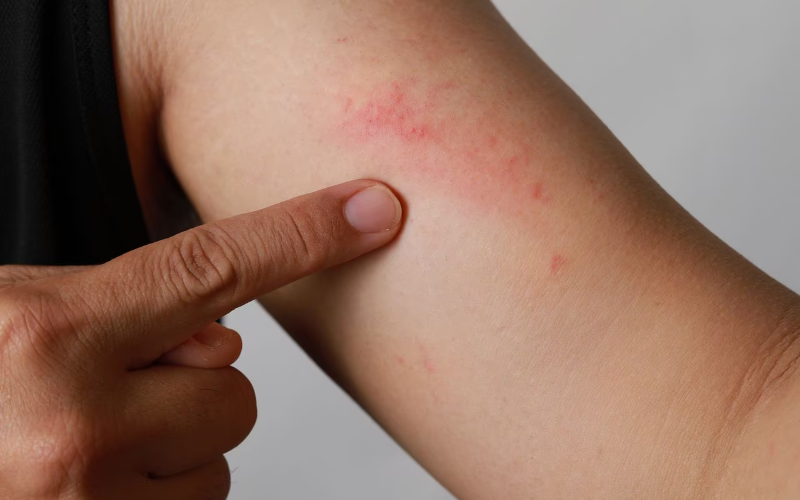
A yeast infection on the skin often causes an itchy, tender, or burning rash with a defined border. The affected area may look moist, cracked, raw, red, purple, brown, or darker than nearby skin. Small bumps or pustules may form around the edge of the yeast rash on the skin.
Common signs of candidiasis include:
- Itching, burning, or soreness
- Moist, peeling, or cracked skin
- Small satellite bumps around the rash
- Discoloration within a skin crease
- Pain where skin surfaces rub together
These signs may suggest a yeast fungal skin infection, but appearance alone cannot confirm the diagnosis. Eczema, inverse psoriasis, ringworm, bacterial intertrigo, and other fungal skin infections can look similar.
Tinea versicolor is another yeast-related skin condition, but it usually causes discolored, finely scaly patches rather than a moist rash with satellite bumps. A clinician may need to examine or test the rash before recommending treatment.
What Causes Candida on the Skin?
A candida infection on the skin develops when heat, moisture, friction, medication use, or a health condition disrupts the skin’s normal balance. Sweat, tight clothing, incontinence, and repeated rubbing can weaken the skin barrier. Hot and humid conditions may also support fungal growth.
Common risk factors include recent antibiotic use, diabetes, pregnancy, obesity, and prolonged dampness. People with weakened immune systems may develop more severe or persistent infections. Steroids and other medicines that reduce immune activity can also increase susceptibility.
How Doctors Diagnose Candida Skin Infections
Doctors diagnose Candida by reviewing the rash’s appearance, location, symptoms, and medical history. Many mild cases can be diagnosed during a skin examination. Testing may be needed when the diagnosis is unclear or the rash does not respond to treatment.
A clinician may collect a skin scraping for microscopic examination or fungal culture. These tests can help distinguish Candida from other fungal infections or inflammatory conditions.
Oral candidiasis affects the mouth and may cause white patches on the tongue or inner cheeks, so it requires a different evaluation.

Treatment for Candida on the Skin
Treatment usually combines antifungal medication with moisture control. Mild cases often respond to a topical antifungal used for the full recommended period. Extensive, severe, resistant, or recurring disease may require oral medicine after a clinical assessment.
Common treatments for fungal infections include:
- Antifungal creams such as clotrimazole, miconazole, ketoconazole, or nystatin
- Powders or other topical products for selected damp areas
- Oral antifungal medicine for severe or resistant infections
- Barrier care when moisture or friction has damaged the skin
No treatment can be guaranteed to kill Candida on the skin immediately. The correct antifungal treatment may start improving symptoms within several days, but the skin can take longer to heal. Treatment may fail when the diagnosis is incorrect, medication is stopped too soon, or the affected area remains damp.
Skin Care and Prevention
Gentle cleansing, thorough drying, and moisture control can support healing and reduce recurrence. No ordinary soap reliably kills yeast on the skin, and soap should not replace antifungal medication. A mild, fragrance-free cleanser is less likely to irritate inflamed skin than antibacterial soaps, scrubs, or fragranced products.
Pat the skin dry after bathing and change damp clothing promptly. Choose loose, breathable fabrics and reduce friction where possible. People with repeated infections may need evaluation for diabetes, medication effects, or immune problems.
Can Candida Be Treated Remotely?
A suspected Candida rash may sometimes be evaluated remotely when clear photographs and a detailed history show a mild, limited condition on visible external skin.
Remote review cannot confirm every diagnosis because several skin conditions can look alike. Image quality, symptoms, medical history, and previous treatment affect whether photographs provide enough information.
In-person care is more appropriate when the rash is painful, widespread, draining, recurrent, or difficult to identify.
Testing may also be needed when antifungal creams have not helped, or a bacterial infection is possible. Fever, rapid spread, swelling, pus, or severe illness requires prompt medical evaluation.
Candida Skin Infection FAQs

Is Candida Skin Disease Contagious?
Candida skin disease is not usually considered highly contagious because Candida already lives on many people’s skin. Direct contact may transfer yeast, but infection usually depends on moisture and individual risk factors. Avoid sharing damp towels and keep personal items clean.
Can Candida Go Away on Its Own?
A small rash may improve when the skin becomes dry and friction stops. Many confirmed infections still require medication to clear fully. Persistent symptoms should be evaluated because another condition may be responsible.
Can Candida Spread Across the Body?
A surface rash can extend into nearby moist skin, but invasive candidiasis is different. Invasive disease can be life-threatening and mainly affects seriously ill or hospitalized people. It is not the usual outcome of a simple skin rash.
Can Candida Return After Treatment?
Candida may return when moisture, friction, diabetes, medication use, or immunosuppression persists. Completing treatment and addressing the trigger may reduce recurrence. Repeated episodes should prompt evaluation for possible underlying causes.
Does Diet Cause Candida Skin Infections?
Diet alone does not directly cause Candida skin disease. Blood sugar control matters for people with diabetes because high glucose levels may increase the risk of infection. Restrictive Candida diets should not replace diagnosis or evidence-based care.
Medical Reviewer
Dr. Alicia Atkins is a medical expert who reviews DermOnDemand educational content for clinical accuracy, patient safety, and clarity of explanation. Her review does not replace an individual diagnosis or treatment plan.