Medically reviewed by Dr. Alicia Atkins, a fellowship-trained dermatologist with more than 15 years of clinical experience.
Last updated: June, 2026
A deep, closed pimple can cause pain and swelling without forming a visible head. This DermOnDemand educational guide explains how these bumps form, which care options may help, and when a lesion needs an in-person medical assessment. It also covers healing time, prevention, scarring, and signs of infection.
Key Takeaways
- A pimple under the skin forms when oil, dead skin cells, and bacteria become trapped deep inside a hair follicle.
- Warm compresses may soothe the area, while benzoyl peroxide or salicylic acid may help clear pores and reduce inflammation.
- Do not squeeze, puncture, or repeatedly touch a blind pimple, as this can increase the risk of pain, infection, discoloration, and scarring.
- Most blind pimples improve within one to two weeks, but deeper nodules may last for several weeks or longer.
- Seek medical care if the bump grows, repeatedly returns, causes severe pain, shows signs of infection, or does not improve with appropriate care.
What Is a Pimple Under the Skin?
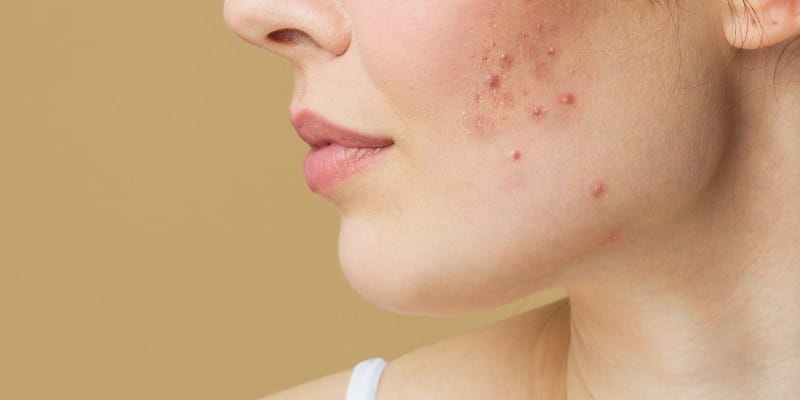
A pimple under the skin is an inflamed type of acne that develops beneath the skin’s surface. Doctors may describe it as a blind pimple, acne nodule, or cyst, depending on its depth and contents. Unlike other types of pimples, it may feel firm and painful without developing a visible whitehead.
A deep pimple may appear as a skin-colored or red bump. It often becomes tender before it becomes easy to see. Acne nodules and cysts develop when oil, dead skin cells, and bacteria cause inflammation deep within the skin.
What Is a Hard Ball Under the Skin?
Hardened pimples under the skin may be acne nodules rather than ordinary whiteheads. Nodular acne is a severe form of acne that causes solid, painful lumps that may last for weeks or months. These lesions also carry a greater risk of dark marks and permanent scars.
A hard spot under the skin may also be a cyst, boil, or inflamed ingrown hair. Appearance alone cannot always confirm the cause. A lump that grows, changes, drains, or remains for several weeks needs medical assessment.
Why Do Deep Pimples Form?
Deep pimples form when oil and dead skin cells block a pore. Bacteria and inflammation may develop around the blockage, causing pressure, swelling, and pain. The lesion becomes more tender when inflammation spreads into deeper skin tissue.
Each hair follicle connects to oil glands that produce sebum. Excess oil, cellular debris, and certain cosmetics can create clogged pores. Hormonal changes, friction, some medications, and family history may raise the risk of recurring acne.
A blind pimple may hurt because swelling presses against nearby tissue and nerve endings. A wrapped cold pack can reduce inflammation and ease pain for a short time. It cannot remove the blockage inside the pore.
How to Treat Pimples Under the Skin
People researching how to remove pimples that are under the skin should expect gradual improvement rather than immediate extraction. Treatment aims to ease discomfort, protect the skin barrier, clear clogged pores, and prevent new lesions. The right approach depends on whether the bump is an isolated blind pimple or part of recurring acne.
Home Care and Topical Treatments
Simple home treatment may help while the lesion heals:
- Apply warm compresses for 10 to 15 minutes, up to three times daily, using a clean cloth. This may soothe the affected area and help some lesions move closer to the skin’s surface.
- Use a wrapped cold pack briefly when pain or swelling is the main concern. Do not place ice directly on the skin.
- Apply benzoyl peroxide or salicylic acid as directed. Benzoyl peroxide reduces acne-related bacteria, while salicylic acid helps loosen oil and cellular debris inside pores.
- Use a gentle cleanser and noncomedogenic moisturizer. Combining several strong acne treatments may cause dryness, peeling, or irritation.
Tea tree oil has limited evidence supporting its use for mild acne and can cause irritation or an allergic reaction. Never apply undiluted essential oil to the face. People with eczema, sensitive skin, or other skin conditions should use extra care when trying new products.
Can You Draw Out a Blind Pimple?
No method can reliably draw every blind pimple to the surface. Heat may help some lesions move closer to the surface, but a firm nodule may shrink without developing a head. Needles, extraction tools, and squeezing can damage the skin and push inflammation deeper.
An under-the-skin pimple is also unlikely to disappear overnight. A warm compress or topical medicine may start the healing process, but deep lesions need time to heal. Pimple patches work best when a blemish contains surface fluid and usually have limited effects on a closed nodule.
Why You Should Not Pop It
Do not cut, puncture, or squeeze a pimple at home. Pressure can damage the follicle wall and spread bacteria or inflammatory material into nearby tissue. This may increase the risk of pain, infection, discoloration, and scarring.
Try to avoid touching the bump during the day. Hands can transfer oil, dirt, and bacteria to the area. Repeated rubbing or pressing may also prolong inflammation.

Medical Treatment
A dermatologist may recommend prescription retinoids, oral antibiotics, hormonal therapy, or isotretinoin for persistent or severe acne. These acne medications require careful selection because their risks, benefits, and monitoring needs vary. Isotretinoin can treat deep, painful cysts and nodules, but it requires medical supervision.
A dermatologist may inject medication into an extremely painful cyst or nodule to reduce pain and help it clear more quickly. Only a trained clinician should perform this procedure. Treatment choice depends on acne severity, medical history, pregnancy status, and scar risk.
How Long Do Blind Pimples Last?
Most blind pimples improve within 1 to 2 weeks, although healing time varies. Deeper nodules may last for several weeks or even months. Lesion depth, repeated touching, irritation, and treatment response all affect how long the bump remains.
Some blind pimples shrink without forming a visible head. If over-the-counter treatment shows no improvement after 4 to 6 weeks, a dermatologist can assess the lesion and recommend an alternative approach. A growing, changing, or repeatedly returning lump should be examined sooner.
Is It Acne or Something Else?
Not every deep bump is acne. Boils, folliculitis, epidermoid cysts, ingrown hairs, and hidradenitis suppurativa can resemble a blind pimple. Location, warmth, drainage, growth, and duration can help distinguish these skin conditions.
Blind Pimples, Cysts, and Boils
Cystic acne causes deep inflammatory lesions that may contain fluid or pus, while nodules usually feel firmer. Both can cause pain, dark marks, and scars. Repeated nodules often need treatment across the acne-prone area rather than isolated spot care.
A boil is a bacterial infection that often starts around a hair follicle. It may become warm, increasingly painful, and filled with pus. Folliculitis and ingrown hairs may develop after shaving, sweating, friction, or infection and can require different treatments.
When Should You See a Dermatologist?
Seek medical care when a bump causes severe pain, repeatedly returns, leaves scars, grows, or remains for several weeks. An examination is also important when the diagnosis is uncertain. Applying stronger acne products to a lesion that is not acne may increase irritation.
Signs that need medical assessment include:
- Spreading redness, warmth, pus, or crusting
- Fever, facial swelling, or feeling unwell
- A painful lump near the eye
- Repeated nodules or early scarring
- A hard bump that changes shape, bleeds, or continues growing
Clear photographs and a medical history may support remote assessment of many acne concerns. In-person care is more suitable when a clinician needs to feel the lesion, test it, drain it, or inject medicine. Remote review cannot assess warmth, exact depth, or firmness through touch.
How to Prevent Deep Pimples
Prevention focuses on reducing blocked pores and controlling inflammation. Use a gentle cleanser, noncomedogenic moisturizer, and sunscreen made for acne-prone skin. Avoid harsh scrubs, frequent picking, and heavy products that remain on the skin.
Choose oil-free cosmetics and remove makeup before sleeping. Clean objects that regularly touch the face, including phones, helmet straps, and sports equipment. Introduce one active ingredient at a time to identify any irritation.
Track whether breakouts follow menstrual cycles, new medicines, hair products, or repeated friction. Do not stop prescribed medicine without consulting the clinician who recommended it. Recurring acne often responds better to a consistent preventive routine than repeated spot treatment.

Common Questions
Can Salicylic Acid Treat a Deep Pimple?
Salicylic acid enters pores and helps loosen oil and dead skin cells. It may prevent new blockages and treat mild inflammatory acne, but it may not fully resolve a deep nodule. Excess use can cause burning, dryness, and peeling.
Will a Blind Pimple Leave a Scar?
Not every blind pimple leaves a scar, but deeper inflammation raises the risk. Squeezing, picking, and untreated, recurring nodules can increase the risk of permanent marks. Early and appropriate care may reduce preventable skin damage, while a dermatologist specializing in acne scars can explain treatment options for marks that persist after healing.
Medical Review and Sources
DermOnDemand health articles should undergo review for medical accuracy, clear sourcing, and consistency with current dermatology guidance before publication.
Medical claims in this guide are drawn from patient resources published by the American Academy of Dermatology and the Cleveland Clinic.