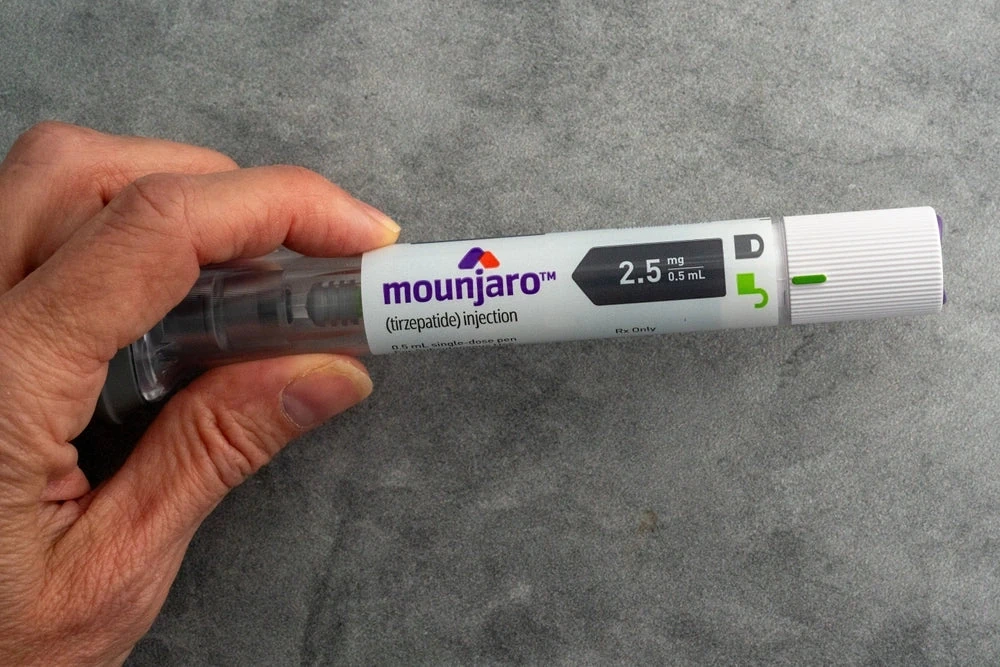
Between manufacturer self-pay programs, savings cards for insured patients, and a new Medicare bridge program, the real cost most people pay ranges from about $25 to $449 a month depending on your situation.
Key takeaways
- List price: around $1,086/month for Zepbound and $1,112/month for Mounjaro, for a standard 28-day supply.
- Zepbound has a manufacturer self-pay option (LillyDirect) starting at $299/month for lower doses, rising to $449/month at the highest doses. Mounjaro doesn’t have a comparable self-pay discount program.
- With commercial insurance plus a manufacturer savings card, eligible patients can pay as little as $25/month.
- Compounded tirzepatide is far more restricted than it used to be now that the nationwide shortage that allowed mass compounding has been resolved.
List price vs. what people actually pay
The list price, also called the wholesale acquisition cost, is the sticker price before any discount or insurance is applied. For tirzepatide, that’s roughly $1,086 a month for Zepbound and $1,112 a month for Mounjaro. Almost nobody pays this amount. It mostly matters as a reference point, since insurance co-pays, savings cards, and self-pay programs are all priced well below it.
Zepbound self-pay pricing (no insurance needed)
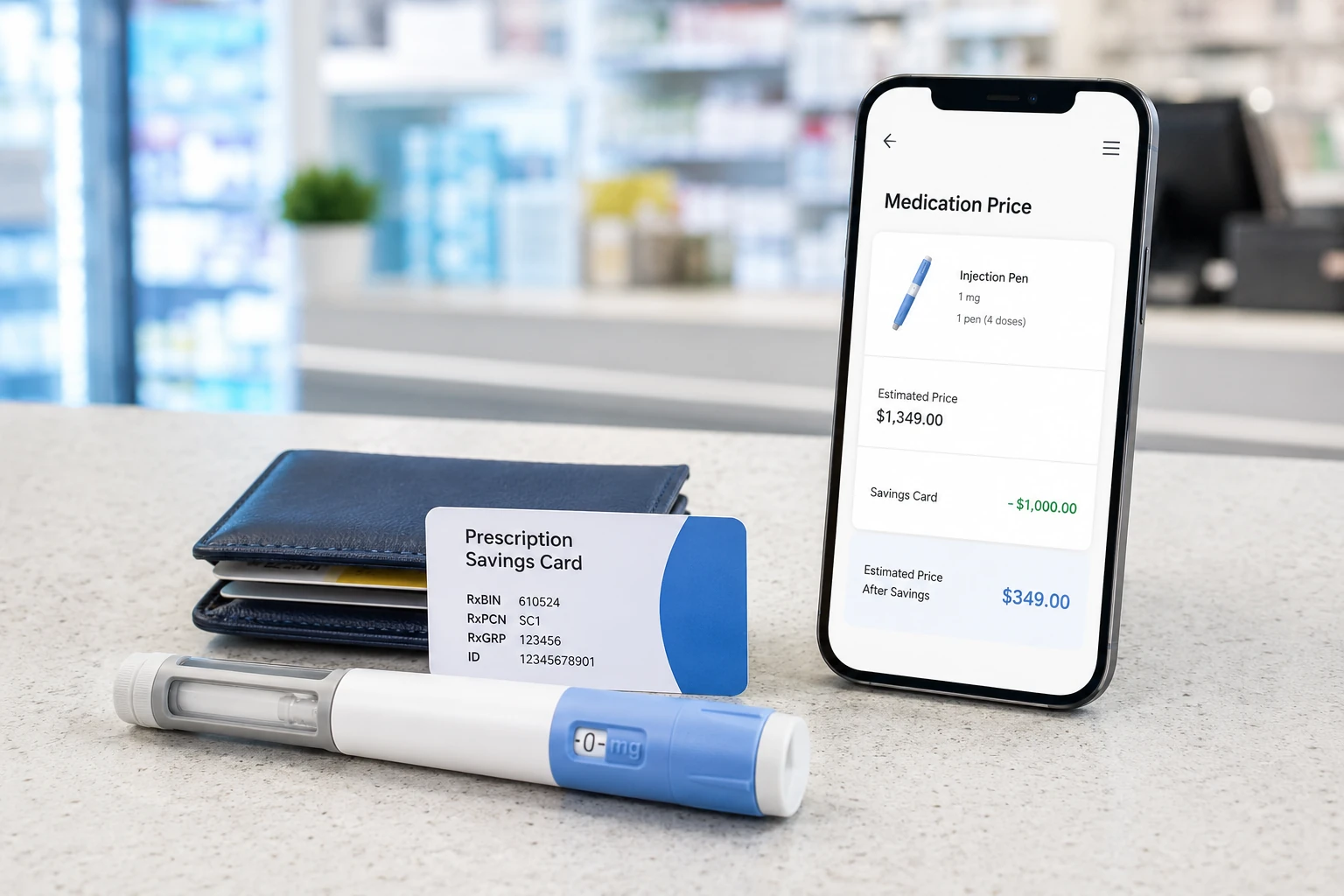
Eli Lilly sells Zepbound directly through LillyDirect at a fraction of list price for patients paying cash, with pricing tiered by dose:
- 2.5 mg to 5 mg: around $299/month
- 7.5 mg to 10 mg: around $399/month
- 12.5 mg to 15 mg: around $449/month
A newer multi-dose KwikPen, which holds four weekly doses in one device, is priced in the same range depending on dose strength. Mounjaro doesn’t currently have an equivalent manufacturer self-pay program, which means people without insurance generally pay closer to Mounjaro’s full list price unless they qualify for a savings card.
Savings cards for insured patients
If you have commercial insurance, a manufacturer savings card can bring your cost down to as little as $25 for a 1-month or 3-month prescription, depending on your specific plan and whether tirzepatide is covered for your indication. The process is straightforward: check eligibility on the manufacturer’s savings page, save the card to your phone or print it, and bring it to the pharmacy along with your insurance information so the discount can be applied at checkout.
Not everyone qualifies. Savings cards typically exclude patients on government insurance like Medicare or Medicaid, and eligibility can depend on whether your plan already covers the medication.
Medicare coverage: the new GLP-1 Bridge program
Starting in July 2026, a temporary Medicare GLP-1 Bridge program gives eligible Part D members access to certain weight-loss medications through the end of 2027. For tirzepatide specifically, only the newer multi-dose KwikPen version of Zepbound qualifies. Standard Zepbound single-dose pens, Zepbound vials, and Mounjaro are not included in this program. Outside of it, most Medicare Advantage and Part D plans still don’t cover tirzepatide for weight loss, though Part D may cover Zepbound when prescribed for moderate to severe obstructive sleep apnea, or Mounjaro when prescribed for type 2 diabetes, depending on the plan’s formulary.
Medicaid coverage varies significantly by state, and some states cover tirzepatide for weight loss while others only cover it for diabetes. Checking your specific state Medicaid formulary is the most reliable way to know where you stand.
What about compounded tirzepatide?
During the tirzepatide shortage, compounding pharmacies were legally able to produce copies of the medication, often at lower prices than the brand-name versions. That shortage has since been resolved, and with it, the regulatory basis that allowed widespread compounding. Compounded tirzepatide is still available in some circumstances, but access is significantly more restricted than it was during the shortage, and pricing and availability can vary a lot by pharmacy. If cost is the main reason compounding appeals to you, the Zepbound self-pay program through LillyDirect is often a more straightforward and consistently available option to compare against.
Getting started

A licensed provider needs to evaluate your health history and weight loss or diabetes management goals before prescribing tirzepatide, and can also help you understand which pricing path, self-pay, insurance, or a savings card, makes the most sense for your situation. At DermOnDemand, our board-certified providers review your information online and build a personalized treatment plan, typically within 24 hours. Our own consultation fee is a flat rate, so you know what your visit costs upfront regardless of which medication or pricing path you end up on.
Frequently asked questions
Why is Mounjaro more expensive than Zepbound for someone paying cash?
Mounjaro doesn’t currently have a manufacturer self-pay program comparable to Zepbound’s LillyDirect pricing, so cash-paying patients without insurance generally pay closer to Mounjaro’s full list price.
Does the price change based on dose?
Yes, for Zepbound’s self-pay tiers specifically, higher doses cost more per month. List prices for Mounjaro are generally similar across dose strengths.
Is compounded tirzepatide illegal now?
Not necessarily illegal everywhere, but access has narrowed significantly since the shortage that permitted mass compounding was resolved. Availability depends heavily on the specific pharmacy and current regulatory status.
Ready to find out what tirzepatide would cost for you? Start an online consultation with DermOnDemand and get a personalized treatment plan, often within 24 hours. Learn more on our Tirzepatide page, or see pricing details here.