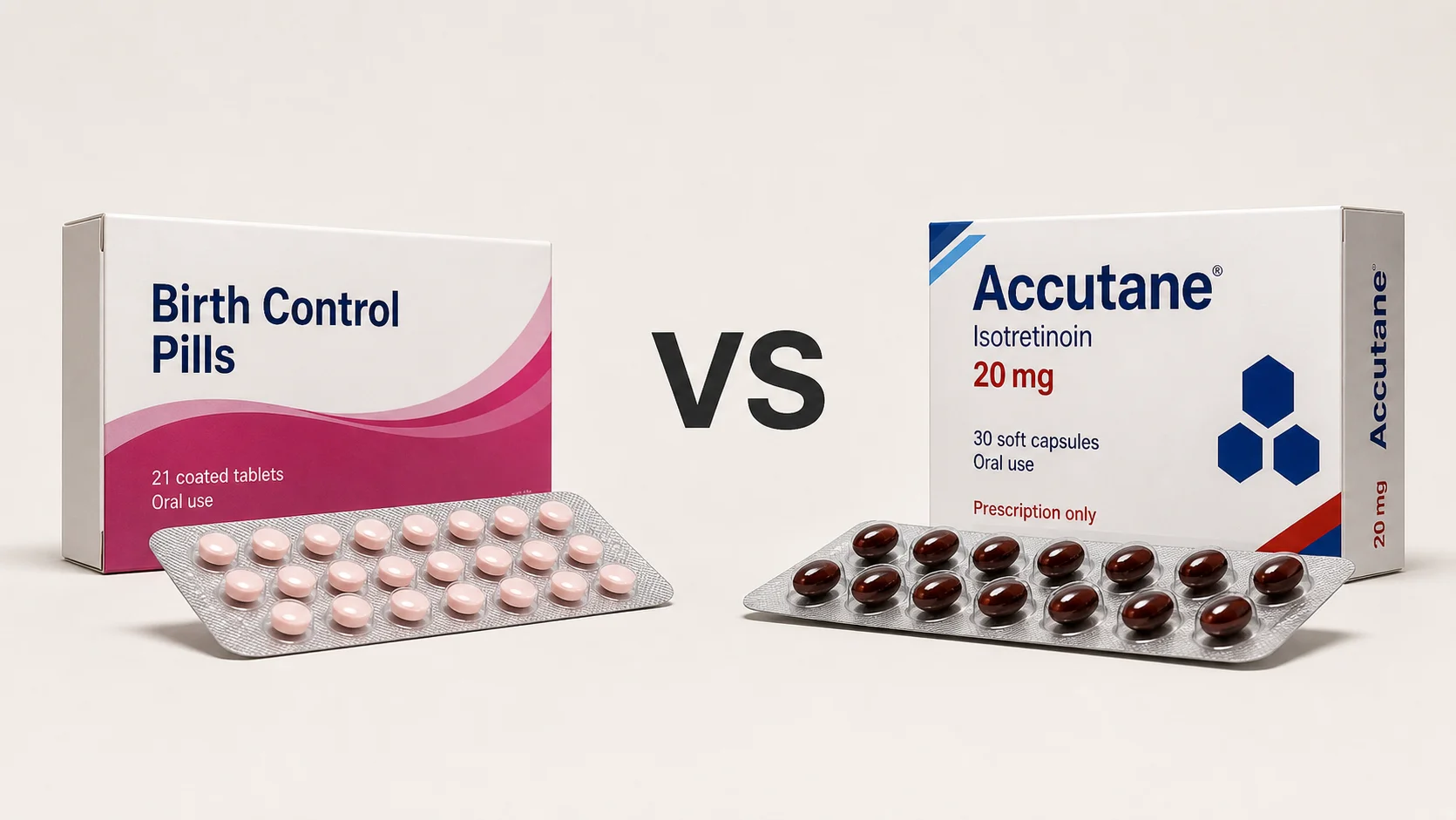
Key Takeaways
- Accutane usually fits severe, cystic, scarring, or treatment-resistant acne. Birth control may fit hormonal acne that flares around menstrual cycles.
- Accutane targets oil production, clogged pores, inflammation, and acne-related bacteria. Birth control helps acne by reducing hormone effects that can increase oil production.
- Birth control pills are not all the same. Combination pills may help acne, while some progestin-only methods can worsen acne in certain patients.
- Accutane has strict pregnancy safety rules because it can cause severe birth defects. Patients who can become pregnant must follow iPLEDGE requirements, including monthly pregnancy testing.
- Acne pills can reduce active breakouts, but they may not treat scars, red marks, or dark spots. Those skin changes may need separate care after acne is controlled.
Accutane vs Birth Control for Acne

Whether Accutane or birth control is better for acne depends on the cause of the breakouts. Accutane, the common name for isotretinoin, is usually used to treat severe acne. Birth control is more often used to treat hormonal acne.
When Accutane May Work Better
Accutane may work better for deep cysts, nodules, scarring risk, or acne that has not improved with topical medications or oral antibiotics. It acts on several acne pathways at once. Dermatology guidelines support the use of isotretinoin for severe, scarring, or treatment-resistant acne.
When Birth Control May Work Better
Birth control may work better when acne flares around periods, affects the jawline, or appears with other hormone-related symptoms. Combination pills can lower androgen activity, which may reduce oil production. This can help with reducing acne linked to hormonal triggers.
Is Accutane Worth It for Hormonal Acne?
Accutane may be worth discussing for hormonal acne when breakouts are severe, painful, or scarring. It does not correct the hormone pattern itself. Some people still need maintenance care after treatment.
How Each Treatment Works
These treatments work in different ways. That is why the best choice depends on the types of acne present. A clinician usually looks at severity, pattern, prior treatment response, and safety factors.
How Accutane Targets Acne
Accutane reduces oil gland activity and helps prevent clogged pores. It can also reduce inflammation and acne-related bacteria. This makes it useful for inflammatory acne that does not respond to standard care.
How Birth Control Affects Hormones
Some birth control pills reduce androgen effects on the skin. Lower androgen activity can mean less oil and fewer blocked pores. Progestin-only methods may worsen acne in some patients.
Best Birth Control Pill for Acne
The best birth control pill for acne is usually a combination pill that contains estrogen and a progestin. Several combination pills are approved for acne in certain patients. The best choice also depends on blood pressure, migraine history, clot risk, smoking, and other health factors.
FDA-Approved Pills for Acne
Clinicians may consider FDA-approved contraceptive pills for moderate acne in patients who can safely take estrogen. These pills are not instant acne treatments. They often take several months to show a visible change.
Combination Pills vs Progestin-Only Pills
Combination pills may help acne because they affect hormones that drive oil production. Progestin-only pills do not work the same way. In some cases, they may make breakouts worse.
Best Birth Control for Acne and Weight Loss
Searches for the best birth control for acne and weight loss are common, but weight loss is not a reliable expected effect. Some people notice weight changes, and many do not. Acne benefits more from hormone balance than from weight change.
Side Effects and Safety Risks
Both options can cause side effects. The right choice depends on benefits, risks, and medical history. These decisions should be individualized, not based only on search results.
Common Accutane Side Effects
Common side effects include dry lips, dry skin, nosebleeds, eye dryness, and sun sensitivity. Some patients need blood tests or medication adjustments. People should report mood changes, severe headaches, vision changes, or intense abdominal pain.
Common Birth Control Side Effects
Common side effects of hormonal contraception may include nausea, breast tenderness, spotting, headaches, or mood changes. Estrogen-containing pills may not fit patients with certain clot risks, migraines with aura, uncontrolled high blood pressure, or some smoking histories. A clinician should review these risks before use.
Pregnancy Rules and iPLEDGE
Isotretinoin can cause severe fetal harm if taken during pregnancy, which is why patients should understand why pregnancy must be avoided on Accutane. The iPLEDGE REMS requires strict pregnancy prevention steps, including two negative tests before treatment, monthly pregnancy testing, and two forms of birth control for patients who can become pregnant. The program also requires contraception during treatment and for one month after the last dose.
Can Acne Be Treated Remotely?
Some acne concerns can be assessed remotely with clear photos and a full health history. Remote care may support management of mild, moderate, or follow-up acne. It cannot replace every exam or safety step.
What Remote Care Can Assess
Remote assessment can review acne pattern, medication history, triggers, and visible inflammation. It can also help identify whether topical care or standard prescriptions may be reasonable. Lab needs and pregnancy safety still require proper coordination.
When In-Person Care Is Needed
In-person care may be needed for severe cysts, uncertain diagnosis, painful nodules, scarring, or medication monitoring. Isotretinoin also requires strict program steps and safety checks. Urgent symptoms should not be deferred to a routine acne review.
How to Discuss Options With a Clinician
Ask which option fits your acne type, what timeline is realistic, and what monitoring is needed; readers reviewing care options can also learn how the clinical intake process is typically organized. A clear medical review can help identify which option best fits your acne type, what a realistic timeline is, and what safety monitoring may be needed.